In the classical arts, relationships matter.
A student may find a mentor through a workshop. A young artist may receive a performance opportunity because an organiser remembered their sincerity. An accompanist may recommend a dancer after a respectful collaboration. A senior artist may guide a younger practitioner because they noticed not only talent, but humility, preparedness and commitment.
This is networking-but in the classical arts, the word often feels uncomfortable.
Many artists associate networking with self-promotion, flattery, influence-seeking or transactional behaviour. For those trained in traditions that value guru-bhakti, discipline and artistic depth, the idea of “building contacts” can appear almost vulgar.
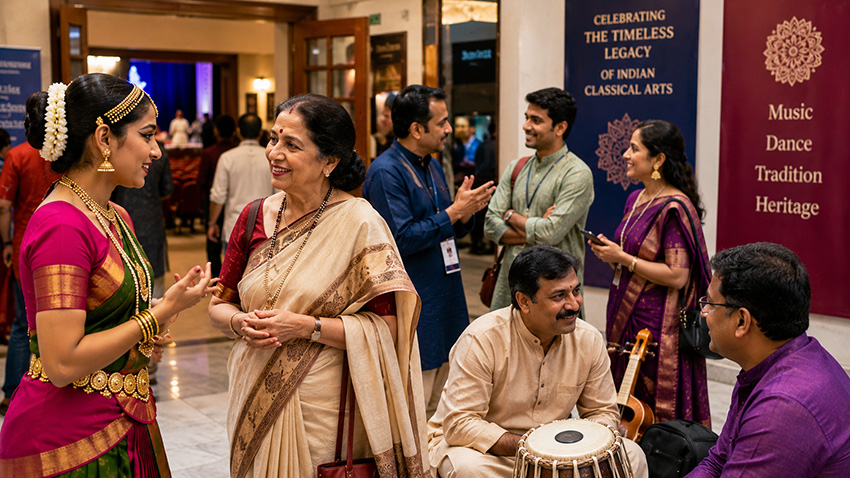
Yet, relationships have always been central to the arts. The guru-shishya parampara itself is built on trust. Baithaks, sabhas, festivals, conferences, residencies and lecture-demonstrations have always created spaces where artists, students, patrons, organisers and rasikas meet one another.
The question is not whether artists should network.
The question is how they can do it with grace.
Networking Is Not Asking for Favours
The most common mistake young artists make is to treat networking as a shortcut to opportunities.
They meet an organiser and immediately ask for a performance slot. They meet a senior artist and immediately request a recommendation. They connect with a journalist and immediately send links for coverage.
This approach rarely works.
Relationships in the arts develop slowly. They are built through repeated interactions, shared values, respect and reliability. A meaningful connection begins not with “What can I get?” but with “How can I engage sincerely?”
Networking is not the act of collecting phone numbers. It is the process of becoming part of an artistic ecosystem.
Attend Performances-Not Only Your Own
One of the simplest ways to build meaningful relationships is to attend performances by others.
Many young artists wish to be invited, seen and supported, but they rarely show up for fellow artists, gurus, festivals or lecture-demonstrations unless they are performing themselves.
Presence matters.
When artists attend concerts and dance recitals regularly, they learn, observe, meet people and become visible in a natural way. Organisers notice those who are genuinely involved in the arts community. Senior artists remember students who listen with attention. Fellow artists appreciate support that is not merely social media-based.
Attending performances also develops artistic maturity. A young musician who listens widely grows differently from one who only posts practice clips. A dancer who watches other forms expands their understanding of stagecraft, abhinaya, rhythm and audience engagement.
The best networking often begins by being a sincere rasika.
Introduce Yourself Briefly and Respectfully
Many artists hesitate to introduce themselves because they fear appearing pushy. Others do the opposite and overwhelm people with long explanations of their training, achievements and ambitions.
A graceful introduction is simple.
It may include your name, art form, guru or institution, and a genuine reason for greeting the person.
For example:
“I am a Kathak student learning under… I enjoyed the way you spoke about abhinaya in today’s session.”
Or:
“I am a young Hindustani vocalist based in Pune. I have followed your festival for some time and wanted to introduce myself.”
This is enough.
Not every introduction has to become a pitch. Sometimes, the purpose is only to begin a respectful connection.
Do Not Turn Every Meeting into a Request
A senior artist has just finished performing. An organiser is handling backstage responsibilities. A critic is taking notes after a long recital. This may not be the right moment to ask for a performance, review or collaboration.
Timing matters.
There is nothing wrong with seeking opportunities, but requests should come after context is built. If you wish to approach someone professionally, write later with a concise message, your profile and relevant links.
When every interaction becomes a demand, people begin to avoid it.
Graceful networking understands when to speak, when to listen and when to wait.
Be Prepared Before Approaching Organisers
If you are writing to an organiser, do not send a vague message saying, “Please give me a chance.”
A professional approach should make the organiser’s work easier.
Include:
- A short introduction
- Your art form and training
- One or two strong performance links
- A brief artist profile
- The kind of presentation you can offer
- Your city and contact details
Also study the platform before approaching it. A baithak series, a youth festival, a lecture-demonstration forum and a corporate cultural evening may all need different kinds of proposals.
A thoughtful message shows that you respect the organiser’s time.
Support Without Expecting Immediate Return
In the arts, generosity is remembered.
Share a colleague’s event if you genuinely value it. Attend a friend’s recital. Congratulate another artist sincerely. Recommend a good accompanist. Introduce two people who may benefit from knowing each other. Appreciate an organiser’s effort.
Do this without expecting immediate repayment.
A culture where artists support only those who can help them becomes narrow and insecure. A culture where artists celebrate one another becomes stronger.
Graceful networking is not about strategic flattery. It is about participating in a community.
Maintain Relationships After the Event
Many artists contact people only when they need something.
They message before an event, ask for support, and then disappear. This makes relationships feel transactional.
A simple thank-you after a performance, a short note of appreciation after a workshop, or a thoughtful response to an article can help maintain genuine contact.
If an organiser gives you an opportunity, acknowledge the team, accompanists, technicians and volunteers. If someone recommends you, inform them how it went. If a guru or senior artist offers advice, follow up after you have worked on it.
Continuity builds trust.
Respect Hierarchies, But Do Not Be Intimidated by Them
Indian classical arts have deep respect for seniority, lineage and experience. This respect is valuable. It protects continuity and reminds young artists that they are part of something larger than themselves.
However, respect should not turn into fear.
Young artists can speak to seniors, ask questions and seek guidance—provided they do so with humility and preparation. A thoughtful question is usually welcome. A careless or entitled approach is not.
Similarly, senior artists and organisers must also make space for young voices. A healthy arts ecosystem needs both reverence and openness.
Grace lies in balancing confidence with humility.
Do Not Confuse Proximity with Credibility
A photograph with a famous artist does not make one accomplished. Being seen at major festivals does not automatically establish artistic seriousness. Name-dropping may create an impression temporarily, but it cannot replace real work.
Young artists sometimes overuse their associations in biographies, captions and conversations. This can backfire.
It is perfectly appropriate to acknowledge gurus, mentors and important platforms. But credibility must gradually come from one’s own practice, conduct and body of work.
Relationships may open doors. Artistry determines whether one is invited again.
Collaborate with Sensitivity
Networking often leads to collaboration. This can be enriching, but it also requires maturity.
Before collaborating, discuss expectations clearly. Who is responsible for concept, rehearsal, payment, travel, publicity, documentation and credits? How will accompanists be acknowledged? Who owns the recording? Will the work be performed again?
Many misunderstandings in the arts arise not from bad intention, but from unclear communication.
A graceful collaborator respects time, rehearses seriously, credits everyone accurately and does not use another artist’s network without permission.
Professional clarity protects artistic relationships.
Avoid Public Negativity
The classical arts world is small. Words travel.
Publicly criticising organisers, comparing artists, complaining about missed opportunities or making indirect comments on social media can damage relationships quickly.
This does not mean artists should never raise concerns. Genuine issues such as non-payment, disrespect, unsafe conditions or unethical behaviour must be addressed. But they should be handled with maturity, evidence and appropriate channels.
Every frustration need not become a post.
Digital conduct is now part of professional reputation.
Build Relationships Beyond Your Own Art Form
A dancer can learn from musicians. A vocalist can learn from theatre practitioners. An instrumentalist can learn from sound engineers. A young artist can learn from photographers, writers, archivists, arts managers and scholars.
The classical arts ecosystem is wider than performance alone.
Building relationships across disciplines can lead to deeper understanding and richer work. It can also help artists appreciate the labour that supports every concert: stage management, lighting, sound, documentation, publicity, hospitality and audience development.
An artist who respects the entire ecosystem becomes easier to work with.
Be Reliable
Reliability is underrated.
Arrive on time. Reply to messages. Share required material before deadlines. Credit people correctly. Honour commitments. Inform organisers early if there is a problem. Do not cancel casually. Do not overpromise.
Many opportunities come not only to the most talented person, but to the person who is talented and dependable.
In the arts, reputation is built slowly through repeated experiences. People remember how you conduct yourself before and after the performance.
Grace is visible in small professional habits.
Let the Work Speak-But Help People Reach It
Some artists believe that if the work is strong enough, nothing else is needed. Others believe constant visibility can create a career.
Both views are incomplete.
The work must be strong. But people must also be able to find it, understand it and trust the artist behind it.
Networking done well is not noise. It is a bridge between the artist and the ecosystem.
It allows a guru to recommend a deserving student, an organiser to discover an emerging performer, a journalist to identify a meaningful story and a rasika to follow an artistic journey.
Engage with Critics as Learners, Not Publicists
Critics are often viewed with either apprehension or expectation. Some young artists avoid them altogether, while others approach them only in the hope of securing a favourable review. Neither approach helps build a healthy artistic relationship.
A critic’s primary responsibility is not publicity but thoughtful observation, documentation and informed evaluation. Their role is to contribute to the larger discourse around the arts, helping audiences appreciate performances while encouraging artistic reflection. Whether one agrees with a review or not, criticism has long been an important part of the growth of classical traditions.
Artists should feel comfortable introducing themselves to critics at appropriate moments, sharing their profiles or performance details when relevant, and engaging in meaningful conversations about the art rather than seeking praise. Similarly, critics appreciate artists who are open to dialogue, respect differing viewpoints and understand that honest criticism is not personal criticism.
A relationship built on mutual respect benefits everyone. It encourages richer conversations, better documentation of the arts, and a stronger cultural ecosystem where artists and critics see themselves as partners in preserving and advancing the tradition, rather than as adversaries.
Relationships Are Also Part of Sadhana
The classical arts teach more than technique. They teach patience, listening, respect, timing and sensitivity. These qualities are equally important in building relationships.
Networking in the classical arts should not feel like aggressive self-promotion. It should feel like participation in a living tradition.
Show up. Listen. Learn. Introduce yourself with dignity. Ask with respect. Support without calculation. Collaborate with clarity. Acknowledge others generously. Let your conduct reflect your training.
Opportunities may or may not come immediately.
But over time, people remember artists who carry both talent and grace.
In the classical arts, relationships cannot be hurried or manufactured. Like riyaz, they grow through consistency, sincerity and mutual respect. Every meaningful conversation, every concert attended, every thoughtful collaboration and every act of professional courtesy contributes to a reputation that no publicity campaign can create. Opportunities may come and go, but trust endures. For young artists, the greatest network is not the longest contact list-it is the community of people who know them as dependable, respectful and committed practitioners. If we can build relationships with the same patience and grace with which we pursue our art, the classical arts ecosystem will become not only stronger, but also more generous, collaborative and welcoming for generations to come.