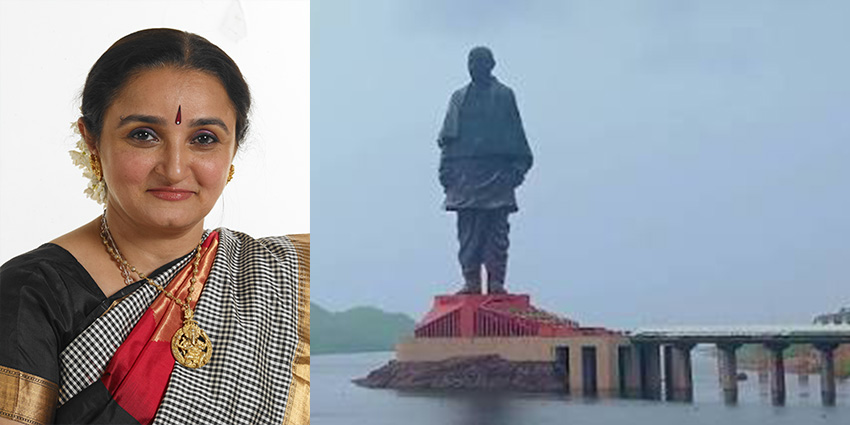
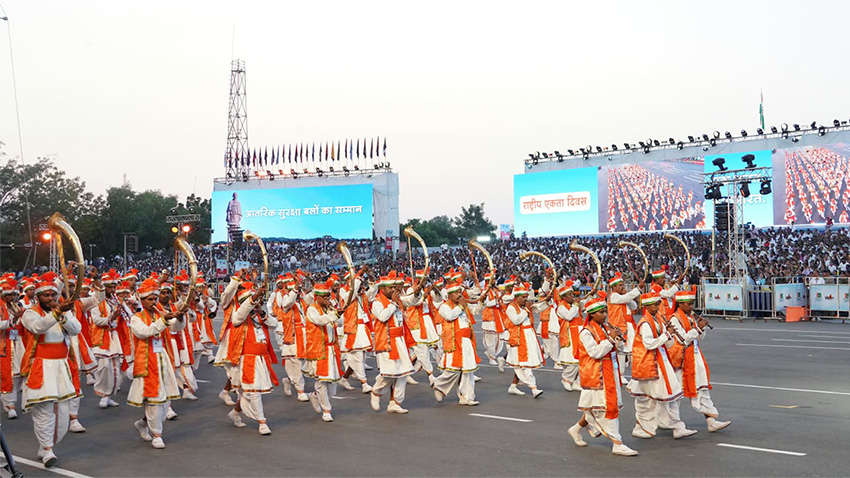
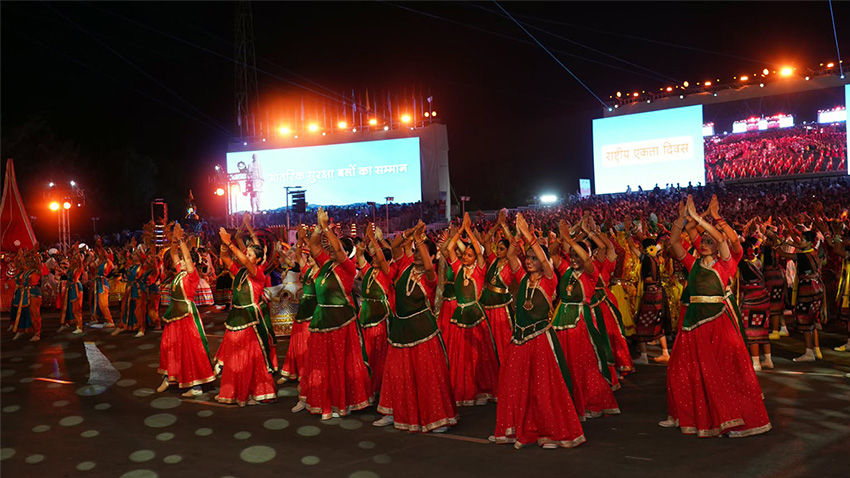
India’s cultural diversity is its greatest strength, and bringing its myriad artistic traditions together on one national platform is a powerful way of celebrating that unity. This vision came alive on 31 October 2026 at Ekta Nagar, Gujarat, near the iconic Statue of Unity, where approximately 5,000 artists from different regions came together for a spectacular cultural presentation titled Ek Bharat, Anek Rang, commemorating the 151st birth anniversary of Sardar Vallabhbhai Patel.
 Curated by the Sangeet Natak Akademi, under the leadership of its Chairperson, Dr Sandhya Purecha, in collaboration with the Government of Gujarat, the presentation brought together nearly 50 cultural elements representing India’s classical, folk and regional traditions. What made this celebration particularly meaningful was the participation of communities living in Gujarat whose ancestral roots lie in different states, yet who continue to preserve the artistic traditions of their ancestral homes.
A renowned Bharatanatyam exponent, Sanskrit scholar and cultural administrator, Dr Purecha has consistently worked towards preserving and promoting India’s intangible cultural heritage. Sharing the vision behind this extraordinary presentation, she says, “The fundamental idea was to celebrate India’s diversity and demonstrate how our different cultural identities contribute to one larger national identity. National Unity Day commemorates Sardar Vallabhbhai Patel, whose extraordinary contribution to integrating the country remains an inspiration. We wanted to express the same spirit of integration through India’s traditional music and dance. Although our expressions may differ, our cultural roots connect us.”
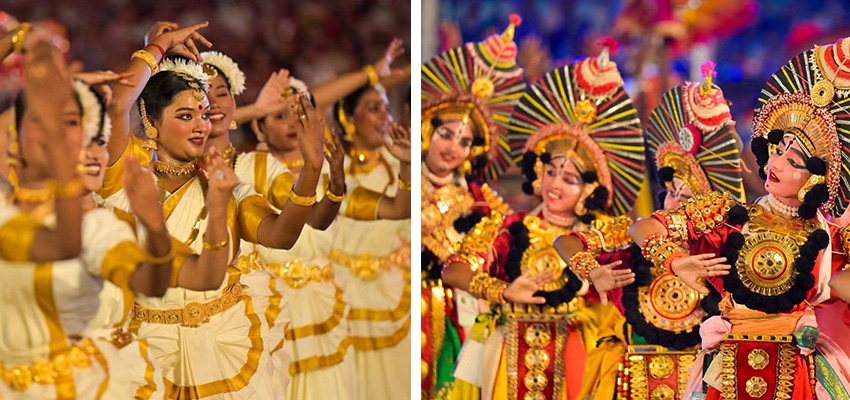
Of the approximately 5,000 participating artists, around 3,000 were from Gujarat, while the others came from different parts of the country. Explaining the unique approach, Dr Purecha says, “We particularly wanted to involve communities residing in Gujarat whose ancestral roots belonged to different states of India. Many have lived here for generations while preserving their original languages, customs, music and dance traditions. We encouraged these communities to curate presentations representing their respective cultural identities. This gave them ownership of their traditions and brought their artistic voices to a national platform.”
Bringing together so many artistic traditions required extensive planning, coordination and sensitivity towards the identity of every participating group. “Every tradition has its own musical structure, movement vocabulary, costumes and performance practices. Our objective was to preserve these individual identities while creating a cohesive presentation,” she explains.
The production also brought together several distinguished creative talents. Lyrics by Irshad Kamil, music by Shankar Mahadevan, costumes by Navneet Patil and voice-over by Harish Bhimani added a distinctive dimension to the presentation.
For Dr Purecha, dance is a universal language that transcends geographical and linguistic boundaries. “Unity does not mean uniformity. We do not have to abandon our individual identities to become one nation. Instead, we must respect and celebrate one another’s differences. Our diversity is not a division; it is our strength,” she says.
She also emphasises the responsibility of cultural institutions such as the Sangeet Natak Akademi to document, preserve and promote India’s performing arts, ensuring that traditional artists receive recognition and opportunities and that their knowledge reaches younger generations.
Reflecting on the significance of Vande Mataram, she says, “Vande Mataram is not merely a song; it is the eternal expression of India’s soul, strength, pride and collective consciousness. It represents our civilisational continuity and the spirit of unity that binds our diverse traditions, cultures and communities into one nation.”
With India marking 150 years of Vande Mataram, Dr Purecha wanted its deeper meaning and emotional essence reflected at the very beginning of the musical presentation.
“Therefore, I composed Sanskrit verses expressing my personal feelings and reverence for Vande Mataram, which were placed at the opening of the song. My humble endeavour was to bring alive its spirit through India’s magnificent performing arts traditions, celebrating our unity in diversity and the timeless glory of our motherland. Vande Mataram is not just something we sing; it is something we feel, live and carry in our hearts.”
For Dr Purecha, Ek Bharat, Anek Rang represents the true spirit of India: thousands of artists, nearly 50 cultural elements and countless traditions coming together to celebrate one national identity.