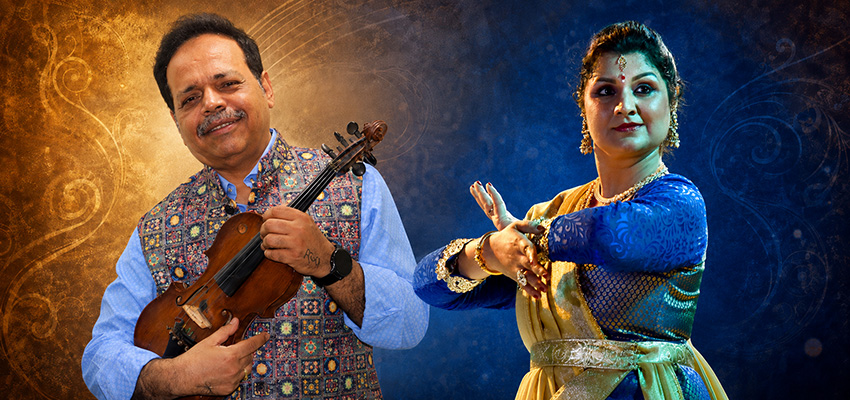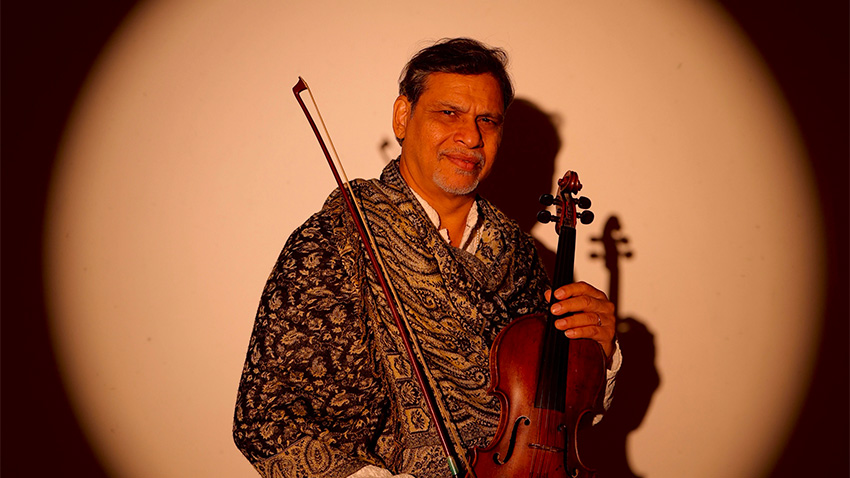
ClassicalClaps is delighted to introduce Classical GupShup, a new column by Dr Ratish Tagde, Hindustani classical violinist and cultural entrepreneur.
Through informal conversations and personal observations, the column will bring readers stories of the people who sustain and enrich Indian classical music — from concert organisers and instrument makers to teachers, young musicians, baithak hosts and passionate rasikas. It will celebrate their journeys, contributions and challenges, often overlooked in the spotlight on performers.
A Note to readers
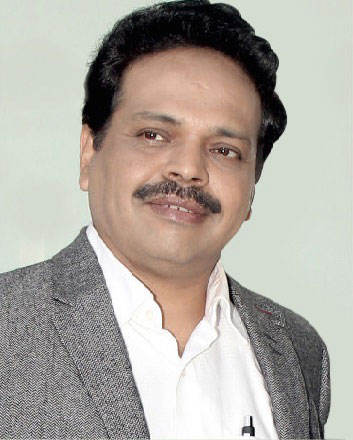
Over the years, as a performing musician, I have travelled across India and the world, meeting extraordinary people whose dedication keeps Indian classical music alive. Some are musicians and teachers; others are organisers, instrument makers or simply passionate listeners who go out of their way to support the music they love.
We often celebrate the artist on stage, but rarely pause to consider the many people who make that performance possible. During my recent concert tour of North America, I was once again reminded of the remarkable commitment of those who carry our musical traditions across geographical and cultural boundaries.
Through Classical GupShup, I hope to bring these stories to readers — stories of perseverance, sacrifice, passion, ingenuity and sometimes humour. This is not intended to be another series of celebrity interviews, but an opportunity to discover people whose contributions deserve recognition, whether or not their names are widely known.
I also invite musicians, organisers, students and rasikas to suggest individuals whose stories deserve to be told.
Because recognition should not depend on fame, and meaningful contributions should never remain invisible.
Let the GupShup begin!
— Dr Ratish Tagde
Rajib Doogar and Kansen: Rediscovering the Art of Listening
The Kansen Aesthetics — An Intimate Baithak in Seattle Celebrating Raga, Rasa and the Musical Legacy of Pandit V. G. Jog
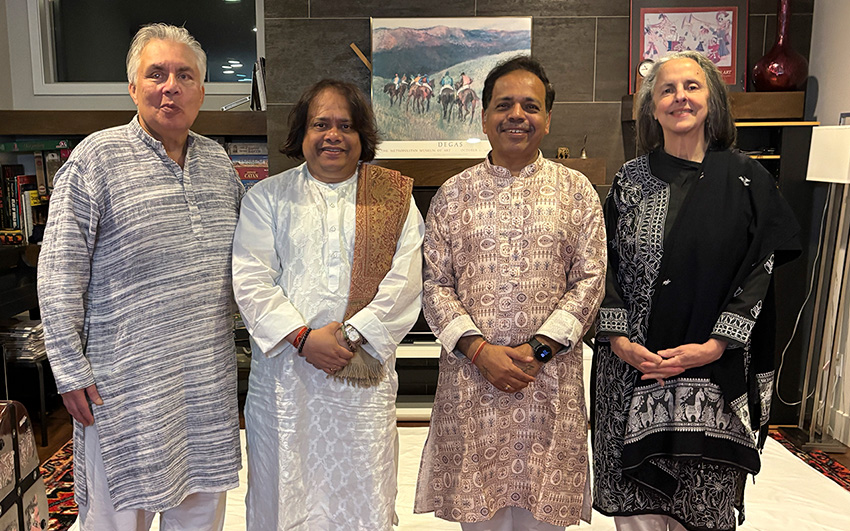
 During my recent North American concert tour, I had the privilege of performing at a very special Baithak hosted by Rajib Doogar ji at his residence in Seattle, USA. Among the many memorable concerts during my journey, this evening occupied a particularly meaningful place in my heart.
It was an encounter with a fascinating musical philosophy called Kansen, an intimate gathering of discerning Rasikas, and, above all, a deeply personal remembrance of the legendary violin maestro, Pandit V. G. Jog.
Rajib ji is himself a violinist who received his musical training from Pandit Jog. I, too, have shared a strong musical and personal connection with Jog Sahab. This common bond gave the evening an emotional dimension that went far beyond a conventional musical performance.
In many ways, I felt that the evening was an offering of gratitude to a maestro whose extraordinary contribution helped establish the violin as a powerful voice in Hindustani classical music.
The Kansen Aesthetic: Letting the Raga Speak
What makes Kansen distinctive is its philosophy of creating an environment in which the Raga remains the supreme musical expression.
Through his fascinating concept of Kansen, Rajib ji is making a thoughtful effort to revive the musical atmosphere of the old Darbar era, when there were no microphones or electronic amplification. Music was experienced in its most natural form, allowing listeners to appreciate the original voice texture of a vocalist or the pure acoustic sound of an instrument, without any electronic intervention.
The concept advocates natural acoustic sound without amplification, minimal accompaniment, and an emphasis on spontaneous melodic exploration. It encourages long-form improvisation, particularly the unmetered exposition of Alaap, drawing inspiration from the expansive traditions of Dhrupad and Bada Khayal.
In today’s concert environment, where technical brilliance, rhythmic excitement, and dramatic climaxes often receive immediate appreciation, Kansen invites musicians and listeners to rediscover the beauty of restraint.
For a violinist, this approach is especially meaningful. The violin can sustain a note, explore the finest Shrutis, and express subtle emotional movements through Meend and Gamak. When unnecessary musical distractions are removed, even a single note can communicate an extraordinary depth of feeling.
At Kansen, silence is not an absence of music. It becomes an essential part of musical expression.
Raga, Rasa and the Philosophy of Kansen
One of the most fascinating aspects of Kansen is its philosophical foundation in the Indian aesthetic tradition associated with Bharata Muni’s Natyashastra.
Indian classical music recognizes a Raga as something far greater than a collection of notes. Every Raga possesses its own melodic grammar, characteristic movements, aesthetic boundaries, and emotional identity.
The concept of Rasa helps explain how artistic expression can evoke profound emotional experiences in a receptive listener.
The nine traditionally recognised Rasas—Shringara, Hasya, Karuna, Raudra, Vira, Bhayanaka, Bibhatsa, Adbhuta, and Shanta—represent different dimensions of human emotional experience.
Kansen explores these aesthetic responses in relation to the three Gunas: Sattva, Rajas, and Tamas, with particular emphasis on the Sattvik and Rajasik spectrum.
Central to this philosophy is the concept of the Sahridaya—the sensitive, empathetic listener whose participation completes the aesthetic experience.
This understanding resonates deeply with my own musical journey. A successful performance cannot be measured only through technical accomplishment or audience applause. Its true fulfilment lies in the emotional connection established between the artist, the Raga, and the Rasika.
Remembering Pandit V. G. Jog
The personal significance of this Baithak became even more apparent after the recital.
Over dinner, in the company of a small circle of music-loving friends, Rajib ji and I continued our conversations about Indian classical music, the intricate personalities of different Ragas, and the extraordinary contribution of Pandit V. G. Jog.
These were not formal discussions. They were spontaneous exchanges shaped by affection for music, shared memories, and deep respect for a musical tradition.
We reflected on how Jog Sahab helped expand the expressive possibilities of the violin within Hindustani classical music, combining the discipline of Raga with a distinctive instrumental identity.
For me, this was perhaps the most touching aspect of the evening. Music had brought us together, but our shared reverence for Jog Sahab created a connection that transcended the performance itself.
I came away feeling that the most meaningful tributes to great musicians are not always delivered through speeches or commemorative functions. Sometimes, they emerge naturally through a sincere musical offering and conversations among those who continue to cherish their legacy.
Reviving the Art of Listening
Through the Centre for Research & Promotion of Indian Music (CRPIM), we have been working towards reviving the traditional Baithak culture in India and exploring its possibilities internationally.
The Kansen philosophy offers an important complementary dimension to this movement.
While the Baithak creates the intimate physical and cultural space, Kansen seeks to define the aesthetic conditions necessary for a deeper musical experience.
In an era of digital abundance and increasingly shortened attention spans, cultivating the patience to appreciate an extended Alaap or the subtle emotional development of a Raga is becoming particularly important.
We need not only more performers, but also more sensitive and informed listeners.
A Musical Memory to Cherish
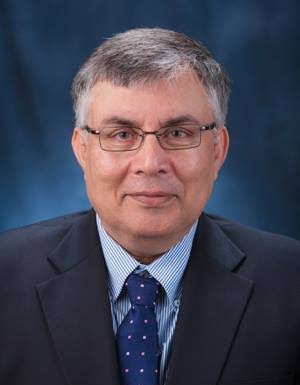
I remain deeply grateful to Rajib Duggar ji for hosting such a meaningful evening and for his thoughtful commitment to the philosophy of Kansen.
What began as a violin recital evolved into an experience of musical introspection, philosophical exchange, friendship, and remembrance.
The evening reaffirmed my belief that Indian classical music derives its greatest strength not from grandeur or spectacle, but from its ability to touch the innermost dimensions of human emotion.
For me, this Kansen Baithak was not simply a concert. It was a humble musical tribute to Pandit V. G. Jog, a celebration of our shared musical heritage, and a reminder that the deepest experiences of music often unfold in the most intimate surroundings.
Perhaps the greatest tribute we can offer our musical Gurus is to keep alive not only the music they taught us, but also the sensitivity with which they taught us to listen.