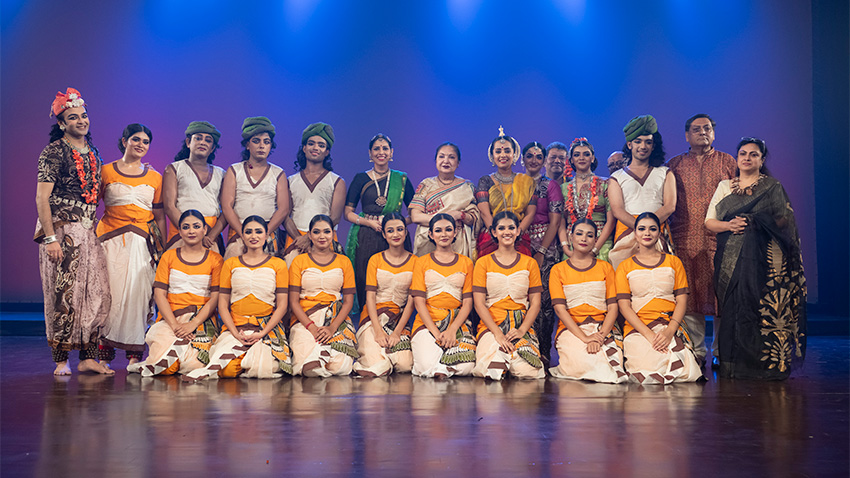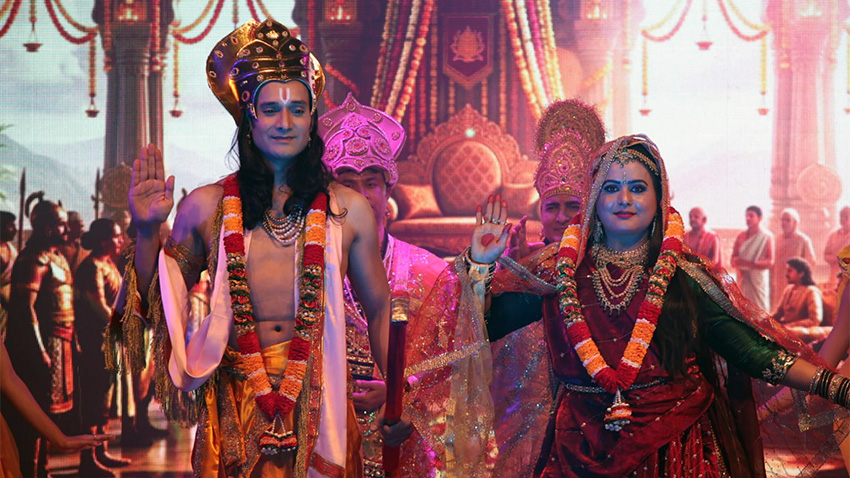
 Kathak exponent and choreographer Jayanti Mala Mishra recently brought her artistry to Ramayan Nritya Natika, presented by Mahaan Nrityangana Sitara Devi Gurukul, Kala Kriti Kendra and Sangeeta Tiwari Trust. The production brought together dance, music and theatre to narrate the journey of Lord Ram—from his birth and childhood to the establishment of Ram Rajya. Directed and written by senior artist Rajesh Mishra, with dialogues by him and choreography and music arrangement by Jayanti Mala Mishra, the production featured nearly 40 artistes.
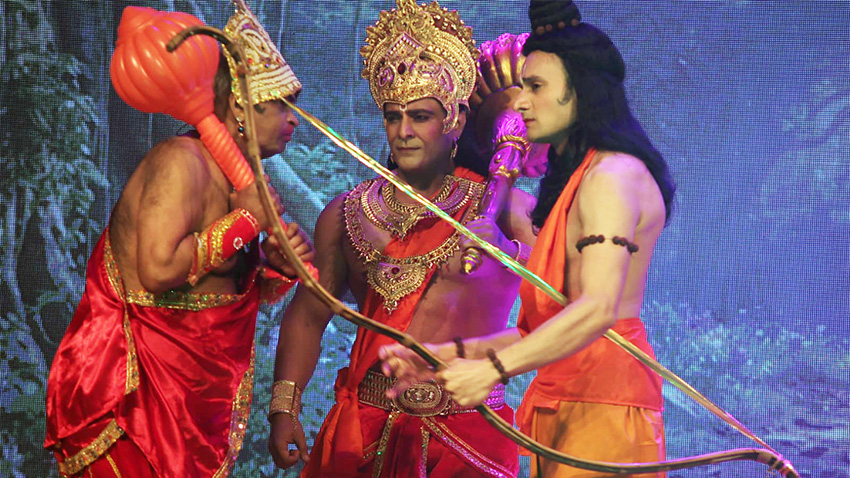
The cast included Arun Mandola as Ram, Sangeeta Tiwari as Sita, Ajay Mahendra as Lakshman, Nirbhay Wadhwa as Hanuman and Rajesh Mishra as Ravan. Jayanti Mala Mishra also appeared in memorable roles as a court dancer in Ravan’s court and as a celestial Apsara. The production explored several important episodes from the Ramayana, including Bal Kand, Sita Swayamvar, Tadka Vadh, Kewat-Bharat Milap, Jatayu Moksha, Shabri’s Navadha Bhakti, Bali-Sugreev, Shoorpanakha, Hanuman’s meeting with Ram, Bali Vadh, the construction of Ram Setu, Lanka Dahan and Ravan Vadh.
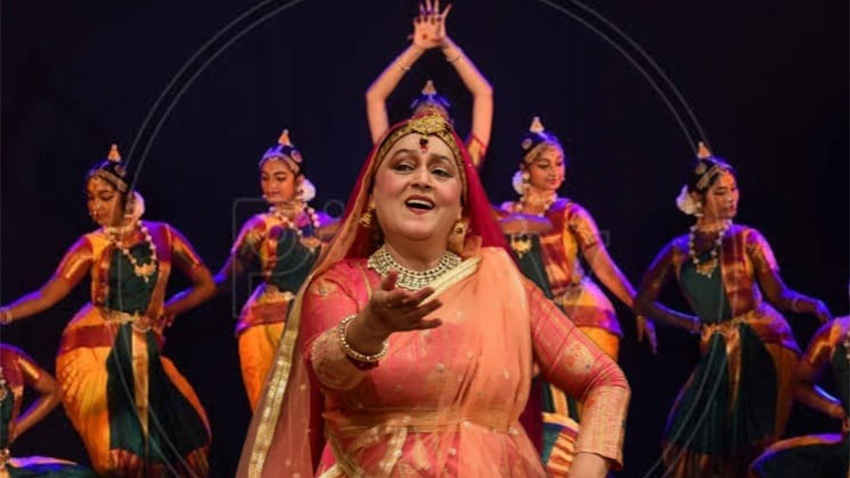
For Jayanti Mala Mishra, the Ramayana offered far more than a familiar narrative. “The Ramayana is not merely a story; it is a living tradition that has continued to inspire generations. Its characters, emotions and values remain relevant even today,” she says. The idea was to create more than a straightforward retelling of the epic and instead allow audiences to emotionally connect with its characters and situations. “Our objective was not simply to narrate familiar episodes but to create an experience in which the audience could emotionally connect with the characters and situations. Dance gives us the language of movement, music creates the atmosphere and theatre gives the narrative a dramatic dimension,” she explains, adding that bringing these three elements together made the production particularly meaningful.
Choreographing an epic as expansive as the Ramayana within the limitations of a stage production was itself a demanding exercise. “The biggest challenge was to bring such a vast epic onto the stage within a limited duration. The Ramayana contains countless episodes, so we had to select moments that would move the story forward while retaining its emotional and spiritual essence,” she says. For Mishra, choreography begins with an understanding of character and emotion. “Kathak has tremendous potential for storytelling through abhinaya, rhythm, movement and expression. We therefore used different aspects of the form according to the requirement of each scene.” Music, too, played an integral role in shaping the production. “Music had to support the dramatic progression of the story. Certain moments required grandeur, while others needed sensitivity and devotional depth. The intention was to ensure that dance and music remained organically connected to the narrative.”
The diverse emotional landscape of the Ramayana also gave Mishra an opportunity to explore the many dimensions of Indian classical dance. From Shabri’s devotion and Jatayu’s sacrifice to the conflict between Bali and Sugreev and the spectacular energy of Lanka Dahan, every episode demanded a different emotional vocabulary. “That is where the strength of Indian classical dance becomes evident. The same production can move from devotion to pathos, from humour and romance to veer rasa and finally to the triumph of dharma,” she observes. “A choreographer must understand these nuances and allow the movement, expression, rhythm and music to serve the rasa rather than overpower it.”
Although her primary responsibility was choreography and music arrangement, Mishra also stepped onto the stage herself, appearing as a court dancer in Ravan’s court and as a celestial Apsara. “As a choreographer, I am generally concentrating on the larger production, the performers and the overall flow. But performing on stage myself is always a different experience,” she says. “The court-dancer sequence gave me an opportunity to explore grace and sophistication, while the Apsara demanded a certain celestial quality.” Even these brief appearances, she believes, must contribute to the larger atmosphere of the production. “Even when a character appears for a short duration, it should contribute to the atmosphere of the story.”
At the heart of the production was Kathak’s own centuries-old relationship with storytelling. “Kathak has a very rich storytelling tradition. The word katha itself reminds us of the form’s connection with storytelling,” Mishra points out. Through abhinaya, tatkar, chakkars, hastaks and rhythmic compositions, she believes a Kathak dancer can communicate both narrative and emotion. “The Ramayana is particularly suited to Kathak because it has such a vast emotional canvas. We can portray the innocence of childhood, the beauty of Sita Swayamvar, the pain of exile, devotion, courage, conflict and ultimately the victory of righteousness.”
Mishra is equally passionate about the direction in which Kathak is evolving today. She sees enormous possibilities for the form to reach younger and wider audiences, particularly as dancers experiment with new presentation formats and collaborations. However, she emphasises that innovation must remain rooted in knowledge. “Kathak today has a wonderful opportunity to reach new audiences. Young dancers are experimenting, collaborating and finding new ways of presenting the form. That is encouraging. At the same time, experimentation should never mean losing the grammar and discipline of Kathak.”
She believes that deep training is essential before attempting to reinterpret a classical form. “Our classical traditions have survived because every generation has learnt them deeply and then found its own voice. I believe the same principle applies today. A dancer must know the technique, rhythm, repertoire, aesthetics and history of Kathak before attempting to reinterpret it.” For her, the future of Kathak lies in balancing tradition with contemporary expression. “Kathak should be able to speak to today’s audience without compromising its identity. We can use contemporary stagecraft, technology and new themes, but the soul of the dance must remain intact.”
Ultimately, Ramayan Nritya Natika was an effort to make a timeless narrative resonate through the language of the performing arts. “I hope audiences experience the Ramayana not merely as a familiar story but as an emotional and cultural journey. The values of compassion, devotion, sacrifice, courage and dharma are universal,” Mishra says. The applause that followed the performance was, for her, a reflection of the collective effort of the entire team. “Nearly 40 artistes had worked together to bring this production to life. For me, the greatest reward was seeing the audience emotionally connect with the story.” For Jayanti Mala Mishra, that connection also represents the continuing responsibility of artists: “As artistes, our responsibility is to preserve our traditions while presenting them in a manner that remains meaningful for contemporary audiences.” Through Ramayan Nritya Natika, dance, music and theatre came together to allow the timeless story of Ram to speak once again from the stage.