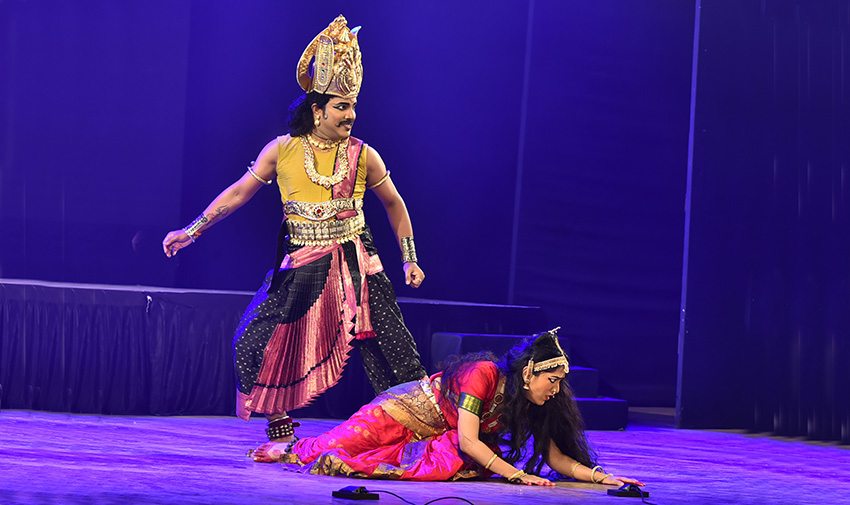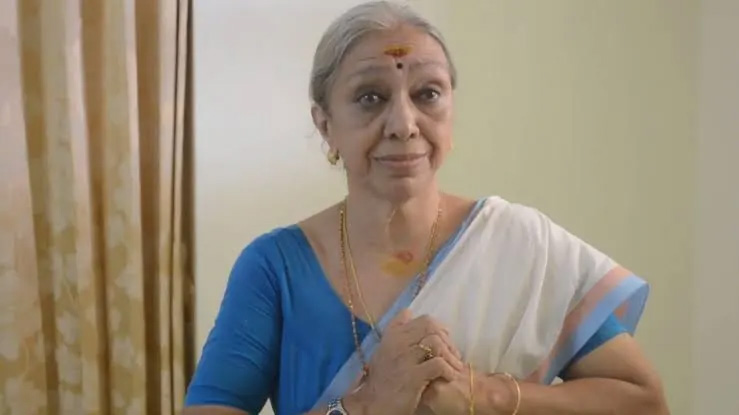
The world of Indian classical dance has lost a remarkable artist with the passing of Guru Sreedevi Rajan, the celebrated Mohiniyattam exponent who devoted her life to preserving, enriching and propagating one of Kerala’s most graceful classical dance forms. She passed away recently, at the age of 84, leaving behind an extraordinary artistic legacy. For those who understand dance not merely as movement but as an expression of the soul, Sreedevi Rajan represented the very essence of sadhana — a lifelong commitment to artistic excellence, discipline and devotion.
Born into a Legacy, Destined to Create Her Own
Sreedevi Rajan was born into one of Kerala’s most distinguished artistic families. She was the daughter of the legendary Kathakali maestro Kalamandalam Krishnan Nair and Guru Kalamandalam Kalyanikutty Amma, revered as the Mother of Mohiniyattam. Growing up in such an environment, music, rhythm, literature and storytelling were integral to everyday life.
Her introduction to classical dance began before she was four. She trained in Mohiniyattam under her mother, Kathakali under her father, Bharatanatyam under A. R. R. Bhaskar and Carnatic music under Professor Kalyanasundaram. Remarkably, her arangetram in both Bharatanatyam and Mohiniyattam took place when she was just five years old.
However, inheriting an illustrious artistic tradition was only the beginning. Sreedevi went on to establish her own identity through decades of performance, research, choreography and teaching. Her extensive training across different disciplines gave her a holistic understanding of the relationship between movement, music, literature and dramatic expression.
A Visionary Who Expanded the Language of Mohiniyattam
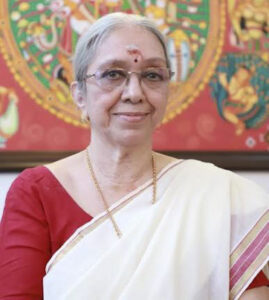
One of Sreedevi Rajan’s most significant contributions was her ability to expand the expressive possibilities of Mohiniyattam without compromising its traditional character. A postgraduate in Malayalam, she explored the works of distinguished Malayalam poets and adapted their literary creations into the vocabulary of dance. Through this approach, she demonstrated how classical dance could embrace literature and contemporary interpretation while remaining firmly rooted in its heritage.
Her creative contributions included choreographing compositions that were relatively uncommon in the Mohiniyattam repertoire. Among her notable productions were Jhansi Saptam, based on the life of Rani Lakshmibai, and Krishnakatha Saptam, depicting episodes from the life of Lord Krishna.
Her scholarly work, Mudrakhyam: A Visual Dictionary of Mohiniyattam Hand Gestures, published in 2012, was another important contribution. The book documented the intricate hand gestures of the dance form, providing students, teachers and researchers with a valuable reference. It reflected her understanding that preserving an art form requires not only practice and performance but also systematic documentation of its knowledge.
The Guru Who Believed in the Power of Dedication
Beyond the stage, Sreedevi Rajan was deeply committed to teaching. She served as a teacher at Cochin Refineries School and later established and directed Nrithyakshethra in Kochi, nurturing generations of students through the traditional guru-shishya relationship.
Her approach to teaching was rooted in patience, discipline and an appreciation of the individual student’s journey. An illuminating glimpse of her philosophy emerged, when she spoke about her Japanese student Hisayo Watanabe, who had continued learning Mohiniyattam despite the challenges of age and language.
Sreedevi observed: “It is very difficult to learn an art without knowing the language. Initially, she did not know the culture, our Vedas or the history. But through a lot of hard work and determination, she has persevered. Today, she is 70. Think about it.”
These words reveal her admiration for sincerity and perseverance, qualities she clearly valued as much as technical ability. She understood that learning an Indian classical art form involves entering its cultural, literary and spiritual world.
Her affection for her students was equally evident when Hisayo fulfilled her long-cherished dream of performing in Kochi. After the performance, Sreedevi remarked: “This was the fulfilment of her life’s desire. She wanted to do this for a long time. She is celebrating it.” Such moments reflected the emotional bond between a guru and a disciple.
Her daughters, Smitha Rajan and Sandhya Rajan, both accomplished Mohiniyattam dancers and teachers, continue the family’s artistic tradition, carrying forward the knowledge inherited from their mother and grandmother.
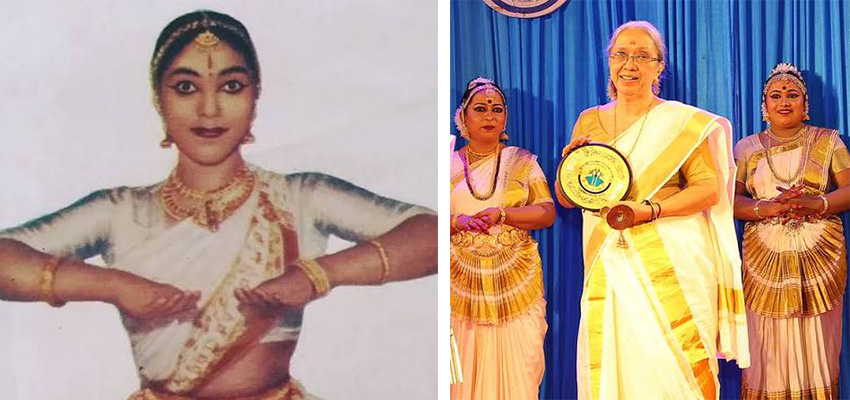
Recognition for a Lifetime of Sadhana
Her contributions received recognition from several cultural institutions. Among her honours were the Kalasree Award of the Kerala Sangeetha Nataka Akademi, the Kalasagar Puraskar and other distinctions. In 2024, she received the prestigious Central Sangeet Natak Akademi Award for Mohiniyattam, acknowledging her comprehensive contribution to the performing arts.
These honours celebrated not merely her achievements as a performer but also her work as a choreographer, scholar, composer and educator. Her artistic journey demonstrated that tradition is not something to be preserved passively; it must be understood, practised, documented and transmitted with sensitivity.
A Legacy That Will Continue to Dance
As a dancer, choreographer and storyteller, I have always believed that classical dance is among India’s greatest cultural treasures. It brings together movement, music, mythology, poetry, philosophy and human emotion. Every dedicated guru becomes a bridge between generations, ensuring that this priceless inheritance remains alive.
Sreedevi Rajan’s life was a beautiful example of that responsibility. She honoured the foundations laid by her illustrious parents while making meaningful contributions of her own. Through her performances, literary adaptations, scholarship and students, she strengthened the artistic identity of Mohiniyattam.
A dancer’s body eventually grows still. The music comes to an end, the stage lights fade and the curtain falls. But the art does not disappear. It survives in the movements remembered by students, the gestures preserved in books, the poetry interpreted through dance and the inspiration passed from one generation to another.
Guru Sreedevi Rajan may have taken her final bow, but her contribution will continue to resonate wherever Mohiniyattam is performed, taught and cherished. Her life reminds us that preserving tradition is not merely an act of remembrance; it is an act of creation. May her soul rest in peace, and may her legacy continue to inspire generations of dancers. Om S