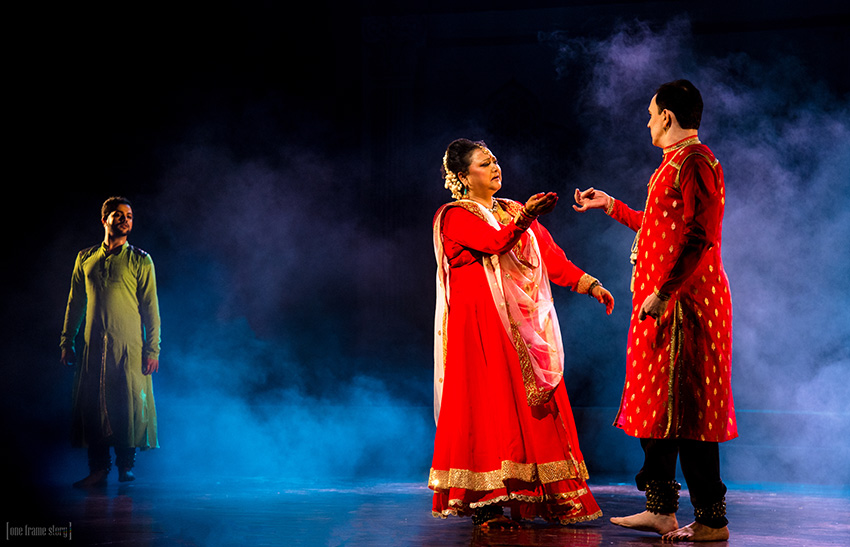
Love is universal, yet its expressions are as complicated as human relationships themselves. It can be beautiful and liberating, but it can also become possessive, painful and consuming. These contrasting dimensions of love formed the foundation of Laal Ishq, the Kathak-based production by exponent and choreographer Alaknanda, first presented in 2025.
 In an earlier conversation with ClassicalClaps, published under the title When Red Speaks – Alaknanda’s Laal Ishq, Alaknanda spoke about love in its many manifestations—passion, creation, devotion, obsession and self-love. She described love as a powerful force that could either liberate or confine, depending on how it was experienced and expressed.
Now, with Laal Ishq – The Betrayal, she takes that exploration into more unsettling emotional territory. The second season continues the journey of the original production, delving deeper into the complexities of faith, trust, emotional neglect and betrayal. While the earlier presentation celebrated love in its many shades, this new chapter examines what happens when the very foundations of a relationship begin to fracture.
For Alaknanda, betrayal is not limited to heartbreak or the actions of another person. It can also take a more personal form—forgetting to love oneself while giving everything to someone who takes that love for granted.
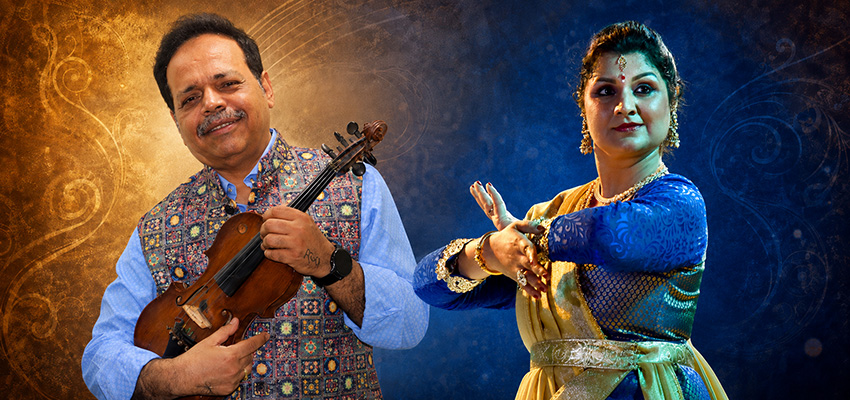
Featuring Kathak and theatre artists Sudip Chakraborty and Dheerandra Tiwari, Laal Ishq – The Betrayal brings together dance, theatre and emotional storytelling. Its visual identity is further shaped by creative director Innee Singh, who shot the promotional video, and photographer Sangeeta Banerjee, whose photographs capture the production’s emotional essence.
Speaking about the inspiration behind the second season, Alaknanda explains, “Laal Ishq was born from my fascination with love as an emotion that influences every aspect of human existence. Love is universal. Every individual experiences it in some form, whether through relationships, devotion, nature or spirituality. But while we celebrate love, we rarely acknowledge the pain and contradictions that can exist within it. With Laal Ishq – The Betrayal, I wanted to continue the story rather than simply repeat it. The wound deepens, the characters evolve, and the truth becomes clearer. Season Two explores what happens when the foundation of a relationship begins to collapse because faith and trust are shaken. It is a continuation, but also a deeper introspection into the human heart.”
This shift from celebrating love to examining its vulnerabilities gives the second season its distinct emotional focus. Rather than viewing betrayal simply as the end of a relationship, Alaknanda considers it an experience that can reveal uncomfortable truths about human expectations and attachments.
She observes, “We often consider betrayal entirely negative, but I feel it is also a part of life and, therefore, a part of love. Betrayal can teach us things that happiness sometimes cannot. It makes us question our choices, our expectations and the way we understand relationships. When love is met with disrespect, ingratitude or silence, the person who loves deeply begins to experience an emotional separation. The fear of losing love is painful, but the fear of losing trust is even greater. Through this production, I am not celebrating betrayal; I am acknowledging its existence and exploring what it reveals about us.”
She further believes that such experiences can become transformative. “As an artist and as a human being, I believe betrayal can also become a teacher. It can awaken us, make us stronger and help us rediscover ourselves.”
At the heart of the production lies the idea of self-betrayal, which Alaknanda believes can be more damaging than betrayal by another person. Although self-love was an important theme in the original Laal Ishq, the second season approaches it from another direction, exploring the consequences of neglecting one’s own identity and emotional well-being in a relationship.
Elaborating on this philosophy, she says, “We often become so deeply involved in loving another person that we forget to love ourselves. We give our time, emotions, energy and everything we have to build a relationship, sometimes with someone who does not value or reciprocate that love. In doing so, we abandon our own happiness, dignity and identity. That, to me, is self-betrayal. Why should we have to lose ourselves in order to love somebody else? Love should first exist within our own soul. When we recognise our own worth, we can love another person without becoming emotionally imprisoned.”
Through this message, she hopes audiences will recognise that loving another person should not require surrendering one’s dignity or individuality. The idea of self-betrayal thus becomes an important extension of the original production’s exploration of love.
The relationship between love and freedom is another recurring concern in Alaknanda’s artistic philosophy. In the earlier production, she spoke about the distinction between love that liberates and obsession that confines. In The Betrayal, that conflict acquires a more intimate dimension, examining the emotional struggle between belonging to someone and remaining true to oneself.
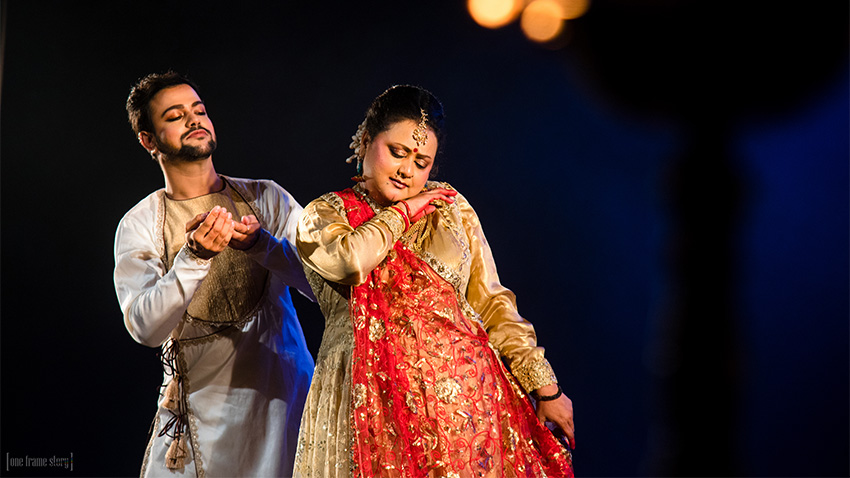
According to Alaknanda, “Love can sometimes feel like a beautiful prison. We willingly surrender ourselves to it because the emotional attachment is so powerful. At other times, we desperately want to break those shackles and rediscover our freedom. This contradiction is part of the human experience. We want to belong, but we also want to be free. We want intimacy, but we fear losing our individuality. Love can become a source of strength when it respects freedom, but it can become suffocating when it turns into possession.”
For her, genuine love should allow individuals to grow rather than demand the sacrifice of their identity.
Alaknanda’s exploration of love also draws upon spirituality and the divine relationship between Krishna and Radha. While the earlier Laal Ishq embraced love for oneself, others and the Divine, the second season uses spiritual narratives to raise more challenging questions about devotion, commitment and the boundaries imposed by society.
“Love is not limited to human relationships. It exists in nature, in creation and in our spiritual consciousness. For me, love is like fire, thick as blood. It flows through everything and connects all living beings,” she explains.
Offering a personal and provocative interpretation of the Radha–Krishna relationship, Alaknanda explores the complexities of love beyond conventional social expectations.
“Krishna represents one of the most profound expressions of love in our cultural and spiritual imagination. His relationship with Radha, his connection with the Gopis and his divine presence remind us that love has many dimensions. Radha’s love for Krishna raises a profound question about love, commitment and betrayal. Radha was married, yet her heart belonged to Krishna. Was this not a betrayal of her husband? Through this relationship, I explore whether love can be confined by social boundaries or whether its deepest expression exists beyond worldly relationships.”
Her interpretation places questions of spiritual devotion alongside the emotional and ethical dilemmas of human relationships. It also broadens the production’s exploration of betrayal beyond romantic disappointment.
Despite its emotionally intense subject, Alaknanda does not want audiences to leave the performance with a sense of bitterness. Instead, she hopes the experience will encourage reflection, self-awareness and a deeper understanding of relationships.
“I hope they understand that love is much larger than the happiness or pain of an individual relationship. Betrayal may leave wounds, but it can also lead to self-discovery. It can teach us to value ourselves, understand others and recognise what genuine love means. Ultimately, I do not want audiences to leave with bitterness or sadness. I want them to leave with a deeper understanding of themselves and the people they love.”
Summing up the philosophy of her production, she adds, “At the end of every story, and at the end of our lives, what remains is love. It survives beyond heartbreak, disappointment and separation. That is the message I wish to communicate through Laal Ishq. Love is universal. And even when trust is broken, love remains one of the most powerful forces that connects us all.”
Through the language of Kathak, theatre and storytelling, Laal Ishq – The Betrayal continues Alaknanda’s exploration of love, but with a greater emphasis on its vulnerabilities and contradictions. Where the original production examined love as a force of passion, devotion and empowerment, the second season turns towards the emotional consequences of broken trust and the importance of preserving one’s identity.
Ultimately, the production raises a question that extends beyond the stage: in our desire to love and be loved, how do we ensure that we do not betray ourselves?
For Alaknanda, the answer lies in recognising that love and self-respect must coexist. Love may survive heartbreak and disappointment, but it should never demand the loss of the person experiencing it.