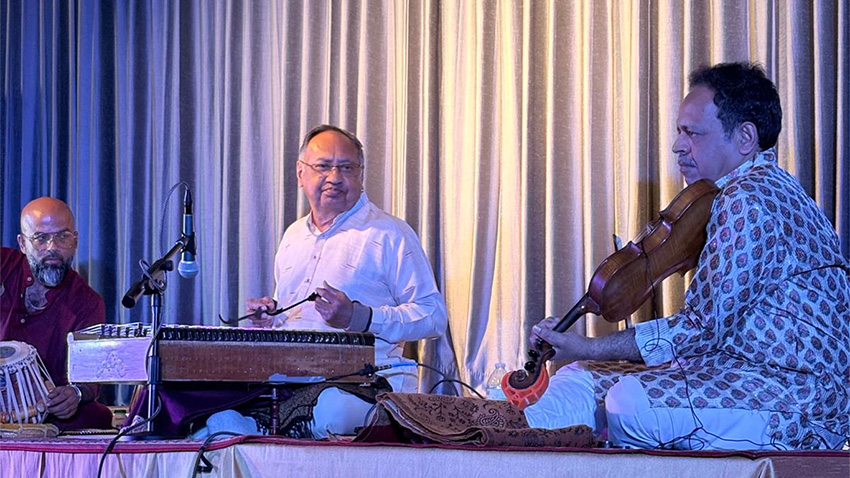
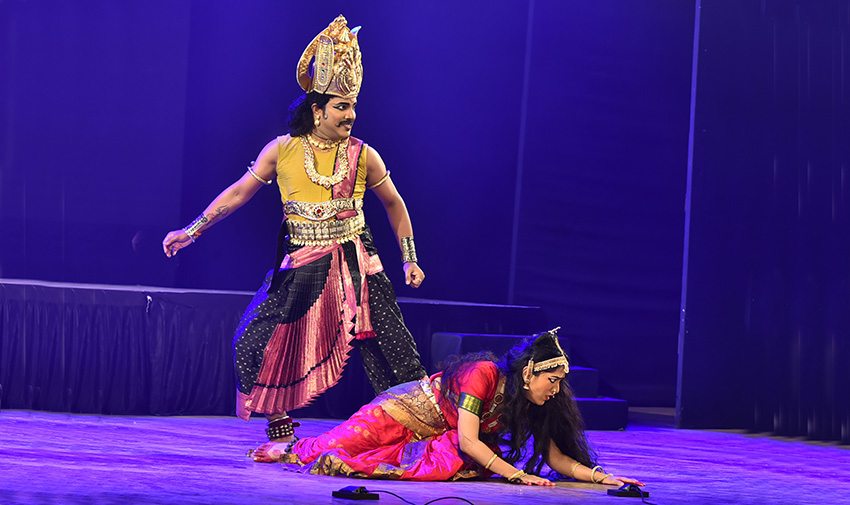
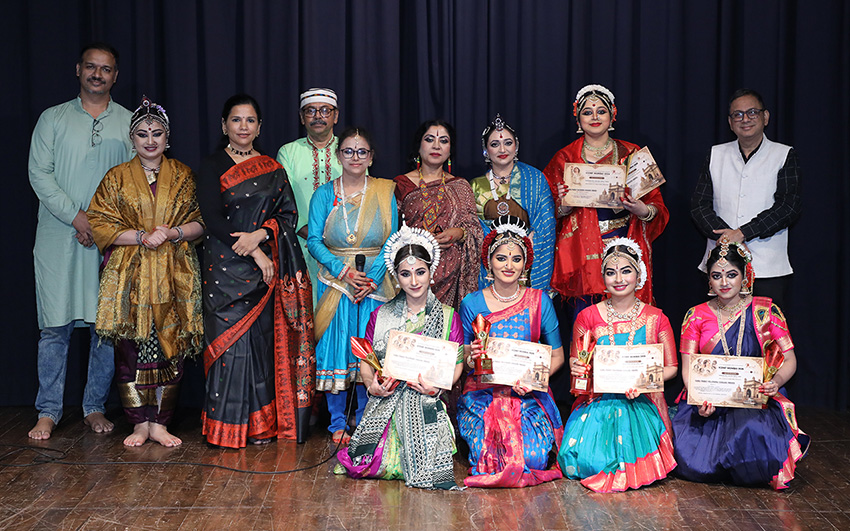
Young and emerging practitioners of Indian classical and folk traditions came together in New Delhi as Kala Kalp Sanskrutik Sansthan organised AAROHAN 2026, a national-level competition and cultural initiative, at the Andhra Pradesh Bhawan Auditorium on 30 August 2026.
Guided by the message “संस्कार से संस्कृति, संस्कृति से उत्कर्ष”, AAROHAN seeks to connect younger generations with India’s artistic traditions while creating opportunities for performance, recognition and learning.
Nearly 500 artists from different parts of the country are participating in AAROHAN 2026, with representation from major cities in North India and Rajasthan as well as Odisha, including its interior and tribal regions. Around 375 artists participated in person, while the remaining participants are taking part through the online mode.
The competition encompasses Indian classical dance, folk dance, Hindustani vocal, Carnatic vocal, musical instruments, Yoga and Vaidik Shloka presentation, with solo, duet, trio and group participation across relevant categories. The online phase is scheduled to conclude on 5–6 September 2026, following which the final results will be announced. Participants will receive Gold, Silver and Bronze recognition, with the prize distribution scheduled for 27 September 2026 during the annual Parijaat event at Andhra Pradesh Bhawan, New Delhi.
A panel of artists and gurus representing different performing traditions evaluated the participants on aspects including technique, rhythm, expression, presentation, authenticity, artistic understanding and overall performance.
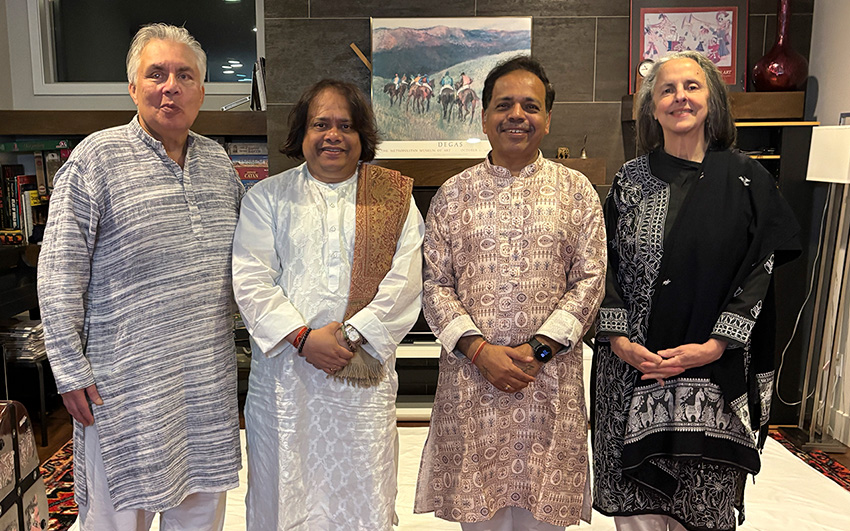
The Musical Instruments category was adjudicated by Ustad Kamal Sabri and Sukant Kumar Nayak, while the Folk Dance jury comprised Govind Mahato, Manish Gangani and Samaru Meher. For Solo Classical Dance, the jury included Chandra Kant Sutar, Lalita Swami and Dr. Paluri Venkata Janaki, while Bala Krishna Marar and Jyoti Rout evaluated the Group Dance category. The involvement of practising artists and gurus gave young participants an opportunity to present their work before experienced practitioners from the field.
Another development during AAROHAN 2026 was the signing and exchange of a Memorandum of Understanding between the KalaKalp Cultural Research & Promotion Council and Kalinga University.
The Council, an initiative of Kala Kalp Sanskrutik Sansthan founded by Mohit Madhav, focuses on cultural research, documentation, preservation and promotion, with an emphasis on connecting cultural heritage with education, research and skill development.
According to the organisers, the collaboration with Kalinga University is envisaged to facilitate initiatives in cultural heritage, research and documentation, performing arts, academic and cultural exchanges, workshops, seminars and skill development. It also seeks to encourage interaction among academicians, researchers, artists, cultural practitioners and students, bringing an academic and research dimension to the initiative’s engagement with cultural education and traditional knowledge.
Speaking about the idea behind AAROHAN, Dr. Atasi Misra, Founder Director, Kala Kalp Sanskrutik Sansthan, emphasised that young artists need opportunities that recognise not only talent but also discipline and an understanding of cultural roots.
“Indian performing arts carry generations of knowledge and wisdom. Through AAROHAN, we want our young generation not only to perform our traditions, but also to understand, preserve and proudly carry them forward,” she said.
Mohit Madhav, Vice President, Kala Kalp Sanskrutik Sansthan and Founder, KalaKalp Cultural Research & Promotion Council, underlined the need for young artists to balance contemporary aspirations with an understanding of their cultural inheritance. He encouraged young practitioners to pursue their ambitions while remaining connected with the traditions they inherit.
The larger conversation around cultural education was carried forward by several guests associated with the programme. Prof. K. Anil Kumar, Head of Department, Janapada Sampada, Indira Gandhi National Centre for the Arts (IGNCA), highlighted the role of families in introducing children to India’s arts and cultural traditions. He observed that exposure to music, dance, literature, folk traditions and cultural practices can contribute to a child’s sense of identity and belonging, and argued that cultural learning should not be regarded merely as an extracurricular pursuit.
Dr. Jyotish Joshi, author, Hindi scholar and former Acting Secretary of Lalit Kala Akademi, drew attention to the relationship between artistic practice and cultural knowledge. He stressed that young practitioners should be encouraged to understand the literary, historical and cultural contexts of the traditions they practise, making research and inquiry an important companion to performance.
The relationship between artistic training and broader life skills was another theme that emerged during the programme. Annu Wadhwa, CEO, Skill Bulls Global, pointed to discipline, creativity, communication, confidence, teamwork and time management as abilities that artistic training can nurture alongside formal education and professional skills.
Meanwhile, Dr. Subhankar Mishra, Joint Director, Department of School Education & Literacy, Ministry of Education, Government of India, emphasised that artistic development requires patience and sustained practice. He encouraged participants to see competitions not simply in terms of prizes, but also as opportunities to perform, observe, learn and improve. He also highlighted the role of parents in providing encouragement without creating unnecessary pressure through comparisons.
Taken together, the conversations at AAROHAN moved beyond competition and recognition towards a larger question concerning India’s traditional arts: how can younger generations be encouraged not only to learn and perform inherited traditions, but also to understand the cultural knowledge that sustains them?
Platforms that bring young practitioners into contact with gurus, scholars, educators and cultural institutions can contribute to this process. The participation of nearly 500 artists from different cultural and geographical backgrounds, together with the effort to connect artistic practice with research and formal education, gives AAROHAN a broader dimension beyond the competition itself.
Through AAROHAN 2026, Kala Kalp Sanskrutik Sansthan sought to create such a meeting ground—where performance becomes an opportunity for learning, cultural inheritance becomes a subject of inquiry, and young practitioners are encouraged to engage with tradition with both skill and understanding.