How does a dancer give form to something that has neither beginning nor end? How can the finite human body evoke an infinite column of light? And when an ancient sacred idea passes through the vocabulary of classical dance, does performance merely retell mythology, or can it lead audiences towards the philosophy beneath it?

These questions lie at the heart of Dwadasha Jyotirlingam: The Enigma of the Endless Radiant Column, a pan-India classical dance project conceived by Usha RK. Presented across four programmes in Bengaluru, New Delhi, Mumbai and Pune, the project brings together classical dancers to explore the narratives and philosophical ideas associated with India’s twelve Jyotirlingams.
The inspiration for the project emerged from Usha RK’s reading of the late Dr Bibek Debroy’s 12 Jyotirlingams, which led her to explore the origins, significance and symbolism of the twelve sacred manifestations spread across India. At the centre of this exploration is an attempt to look beyond the familiar physical representation of the Lingam and revisit the deeper idea associated with it.
The project draws attention to lingam as a Sanskrit word signifying a mark, sign or indication, rather than limiting its meaning to a physical form. The philosophical interpretation informing the production moves further towards the idea of merging and dissolution. With jyoti meaning light or radiance, the Jyotirlingam emerges within this framework as an infinite column of divine light—a manifestation that transcends physical form.
This creates an intriguing artistic challenge. A dancer works with a physical body, occupying a finite space and moving within measurable time. The concept being explored, however, is infinity.
How, then, does one dance the infinite?
The answer perhaps lies in the very nature of dance. A gesture appears and disappears. A posture is held for a moment before transforming into another. Movement occupies space and then releases it. Rhythm creates cycles, while stillness can suggest what lies beyond movement. Unlike a fixed image, the dancing body can continually suggest transformation, emergence and dissolution.
The project also draws upon the traditional narrative in which Brahma and Vishnu attempt to discover the beginning and end of Shiva’s infinite column of light, only to realise that it has neither origin nor conclusion. The familiar temple representation of the Lingam can consequently be viewed as an attempt to give visible form to something that ultimately transcends form. Its circular geometry, with neither beginning nor end, becomes another metaphor for infinity.
It is this space between the visible and the invisible that Dwadasha Jyotirlingam attempts to explore through classical dance.
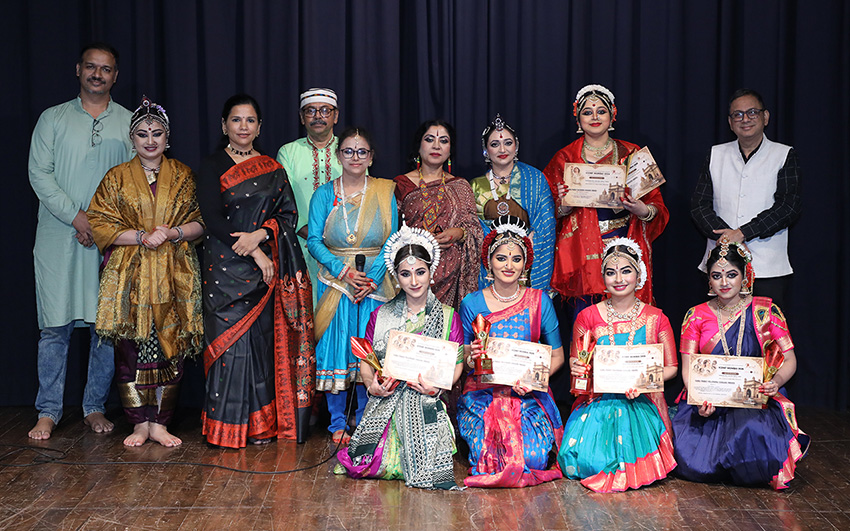
Rather than presenting all twelve stories in one extended production, the project has been structured across four presentations, with three Jyotirlingams and three dancers forming each programme. This allows each narrative to have its own artistic and emotional space while contributing to a larger journey across India’s sacred geography.
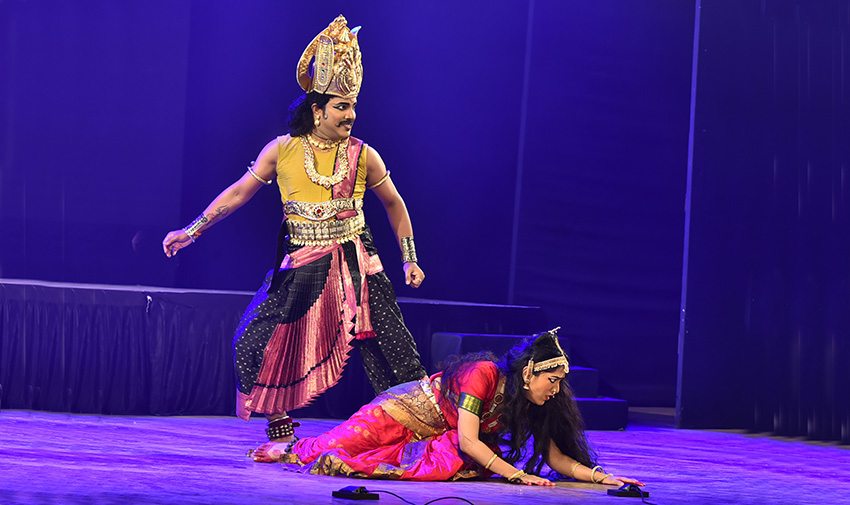
The journey began in Bengaluru on May 28, with Mithun Shyam portraying Rameshwaram Jyotirlingam of Tamil Nadu, Nilava Sen portraying Vishwanatheshwara Jyotirlingam of Uttar Pradesh and Yogesh Kumar portraying Nageshwar Jyotirlingam of Gujarat.
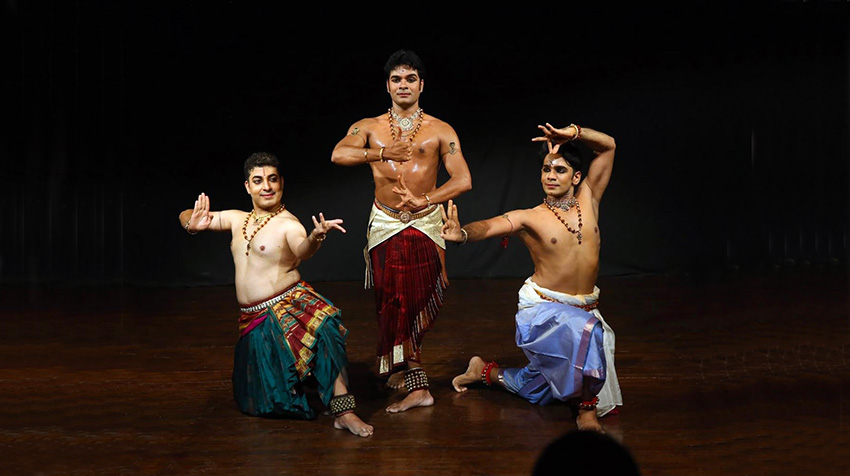
The second presentation, held in New Delhi on August 21, brought together Mithun Shyam as Kedarnath Jyotirlingam of Uttarakhand, Rupesh K C as Baidyanath Jyotirlingam of Jharkhand and Vidhun Kumar as Triyambakeshwar Jyotirlingam of Maharashtra.
The third presentation brings the journey to Mumbai on September 11, with Mithun Shyam portraying Somnath Jyotirlingam of Gujarat, Vidhun Kumar portraying Bhimashankar Jyotirlingam of Maharashtra and Nidhaga Karunad portraying Mallikarjuna Jyotirlingam of Andhra Pradesh.
The final presentation in Pune on September 27 will complete the cycle, with Nilava Sen portraying Omkareshwar Jyotirlingam of Madhya Pradesh, Himanshu Srivastava portraying Mahakaleshwar Jyotirlingam of Madhya Pradesh and Shashank Kiron Nair portraying Ghrishneshwar Jyotirlingam of Maharashtra.
Together, the four programmes create a remarkable artistic map of India. The Jyotirlingams are rooted in different regions, languages, landscapes and local traditions, yet are brought together by a common philosophical thread. The geographical movement of the project therefore becomes part of its artistic identity.
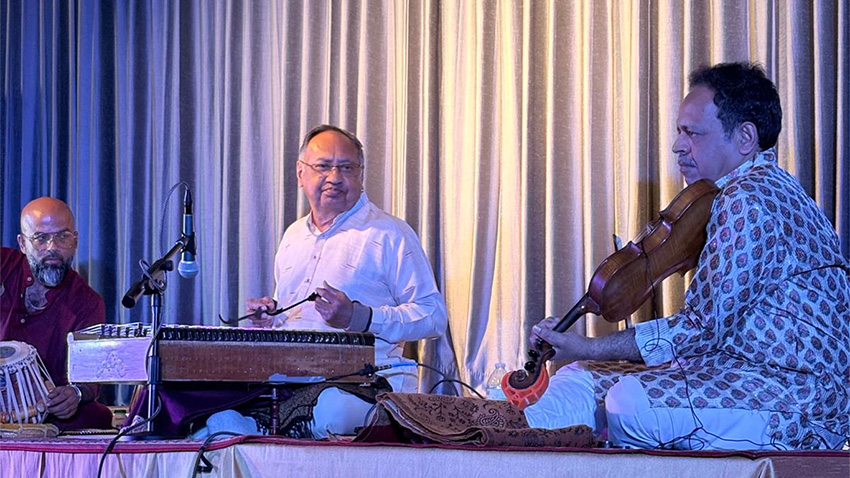
Music is an integral part of this journey. Sujesh Menon is the vocalist across the presentations, with the accompanying musicians changing across the programmes. The Bengaluru presentation features Vinay Nagararajan on mridangam, Mattur Srinidhi on violin and Sharath Suryanarayana on nattuvangam. The New Delhi presentation brings together Vignesh Jayaraman on mridangam, Uma Ganesan on violin and Sharath Suryanarayana on nattuvangam. For Mumbai, the ensemble comprises Dakshinamurthy Pillai on mridangam, B Anantharaman on violin and Kalishwaran Pillai on nattuvangam. The concluding Pune presentation features Dakshinamurthy Pillai on mridangam, Ajay Chandramouli on violin and Prejesh on nattuvangam.
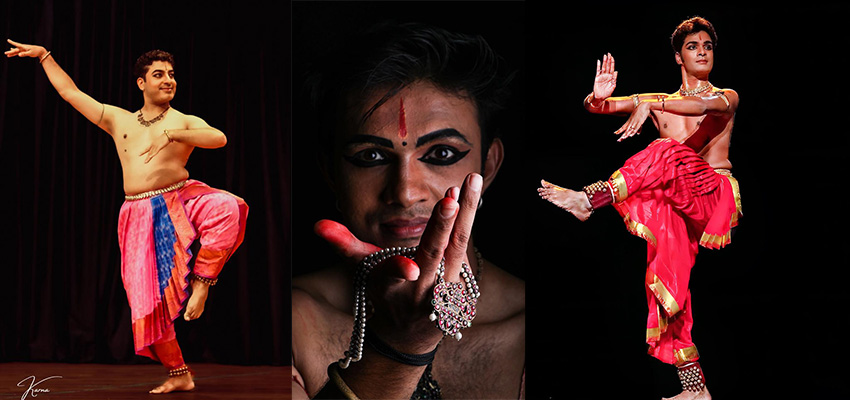
The decision to work with male classical dancers is another distinctive aspect of the project. The conception behind the series connects this choice with the power, energy and spiritual force traditionally associated with Shiva, while also placing a younger generation of artists in dialogue with timeless philosophical themes.
This choice also brings into focus one of the enduring strengths of Indian classical dance—the ability of the human body to become a vehicle for ideas that extend far beyond the body itself. The dancer is simultaneously performer, storyteller and interpreter. Through movement, gesture, rhythm and abhinaya, an inherited narrative can acquire a new experiential dimension.
Importantly, the project does not appear to treat the twelve Jyotirlingams merely as twelve mythological episodes. The stories are being used as pathways into larger questions of transcendence, transformation and spiritual union. According to the project’s conceptual premise, each manifestation of divine light is associated with circumstances that bring transformation, resolution or grace. The mythology therefore becomes a means of contemplating the human journey itself.
The project is also consciously directed towards younger audiences. The dancers, themselves belonging to a younger generation, are envisioned as cultural ambassadors who can engage their contemporaries with ideas that may otherwise remain distant, unfamiliar or reduced to simplified interpretations.
This may be one of the most significant aspects of Dwadasha Jyotirlingam. At a time when India’s traditional knowledge systems are increasingly encountered through fragmented and abbreviated forms, classical arts can offer a different kind of engagement. They can slow down the act of understanding. A story can be experienced rather than merely read; an idea can be felt through rhythm and movement rather than explained only through words.
The project thus opens up a larger question about the role of classical dance today. Can the classical arts remain relevant not simply by modernising their presentation, but by returning to the depth of the ideas they have historically carried?
Dwadasha Jyotirlingam attempts one possible answer.
It brings together mythology, philosophy, Sanskrit thought, music and classical dance, but does not stop at their coexistence. Its larger proposition is that an ancient idea can be approached afresh when it is allowed to move.
The twelve Jyotirlingams consequently become more than twelve sacred destinations. Through the four-part journey, they become twelve points of departure for exploring light, infinity, transformation and transcendence.
The human body cannot become infinite. A stage cannot contain an endless column of light. A gesture cannot completely explain a metaphysical idea.
But perhaps dance does not need to explain the infinite.
Perhaps it only needs to make us experience, for a moment, the possibility of something beyond form.
And in that space between the visible body and the invisible idea, Dwadasha Jyotirlingam finds its language of movement.