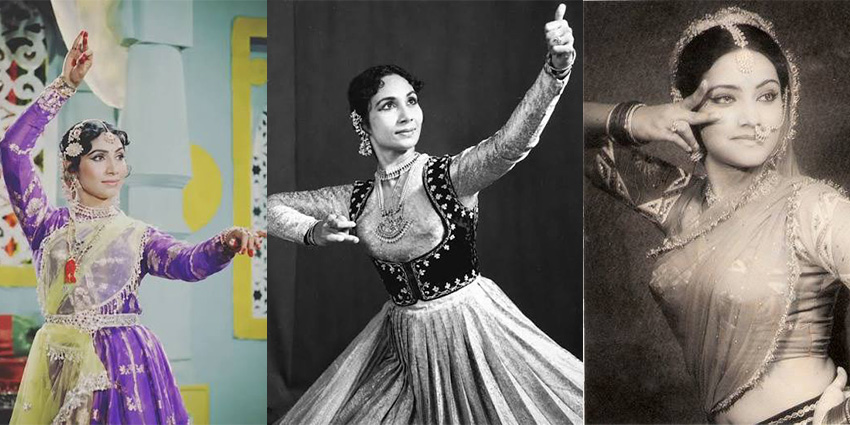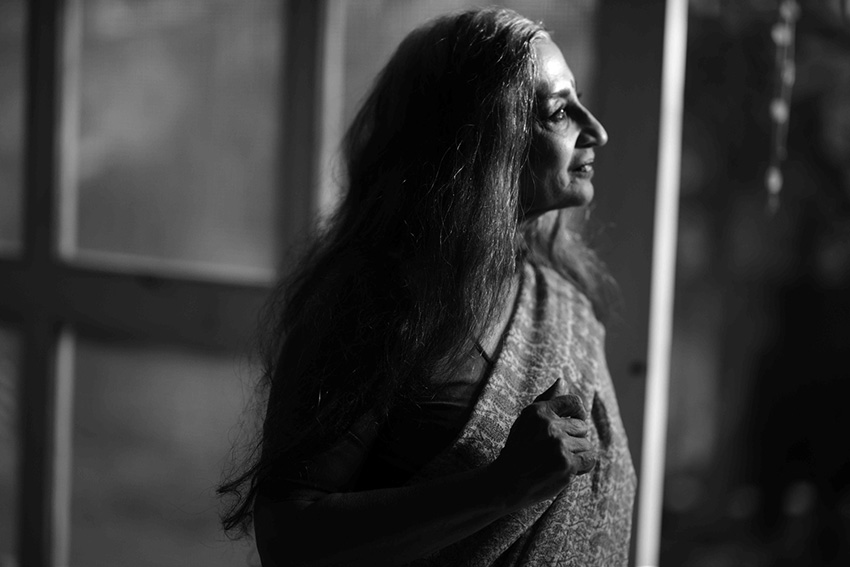
One of Pakistan’s most fearless cultural voices, Sheema Kermani has spent over four decades proving that dance can be much more than performance-it can become a powerful instrument of resistance, social  justice, and women’s empowerment. A renowned classical dancer, choreographer, actor, and human rights activist, she has dedicated her life to preserving the traditions of Bharatanatyam, Odissi, and theatre in Pakistan while fearlessly challenging conservative norms. As the founder of Tehrik-e-Niswan (Women’s Movement), she has consistently used the performing arts to advocate gender equality, artistic freedom, and human dignity. Her remarkable journey reflects an unwavering belief that culture has the power to transform societies and inspire generations.
Looking back on her extraordinary career, Kermani recalls that the defining moment came in 1984, soon after returning from a year of intensive training in India, where she immersed herself in the study of Odissi, Bharatanatyam, and Kathak. What was intended to be a modest recital for a handful of friends became an unforgettable experience. “We had invited barely twenty people, but more than a hundred arrived,” she remembers. At the time, Pakistan was under General Zia-ul-Haq’s regime, when strict Islamisation policies had effectively outlawed dance. “That gathering was not merely an audience appreciating a performance—it was an act of collective defiance,” she says. “It was then that I realized dance itself had become a form of resistance.” From that day onward, she consciously chose to use dance as a vehicle for social change, building upon the activist work she had already begun through Tehrik-e-Niswan.
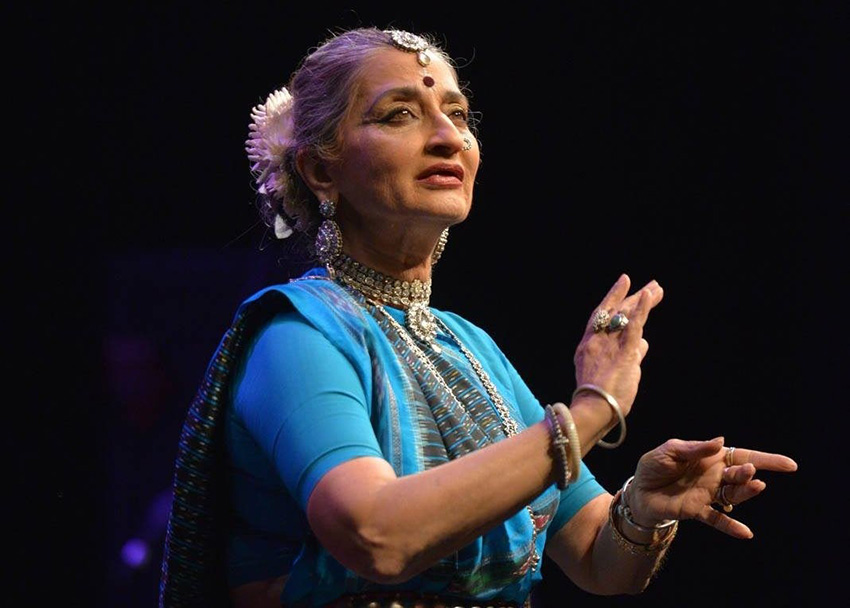
The courage to continue despite relentless social and political opposition, she says, came from an unshakeable faith in the transformative power of art. “Perhaps my rebellious-or rather revolutionary-spirit simply refused to accept policies that sought to suppress artistic expression,” she reflects. Rather than allowing restrictions to silence her, she transformed every performance into an affirmation of freedom, proving that art can flourish even under the harshest circumstances.
Over the years, Kermani’s understanding of dance has deepened beyond aesthetics and technique. As a feminist, she began to recognize dance as a powerful means of reclaiming women’s bodies and identities in patriarchal societies. “Women’s bodies are often burdened with shame and control,” she explains. “For me, dance became a way of reclaiming that space and empowering women.” She believes that when women embrace movement and artistic expression, they challenge structures of domination and contribute to reshaping oppressive social values. For her, dance is not simply about beauty or entertainment; it is about dignity, confidence, and liberation.
Her activism has inevitably brought challenges. Responding to recent reports about her arrest, Kermani remains composed and resolute. “I am a human rights defender who works for women, marginalized communities, and vulnerable groups,” she says. “Those who become the voice of the oppressed often face intimidation, and sometimes arrest is part of that struggle.” Yet she insists that such experiences have only strengthened her resolve. “My commitment to justice, artistic freedom, and human rights remains unwavering.”
Despite political divisions, Kermani firmly believes that classical arts remain among the strongest cultural bridges between India and Pakistan. “Our classical music and dance traditions connect us in ways that politics cannot divide,” she says. Shared folk traditions, stories, musical instruments, aesthetics, and philosophies form a common cultural heritage that deserves to be preserved. In her view, these artistic connections have the potential to foster dialogue, understanding, and peace across borders.
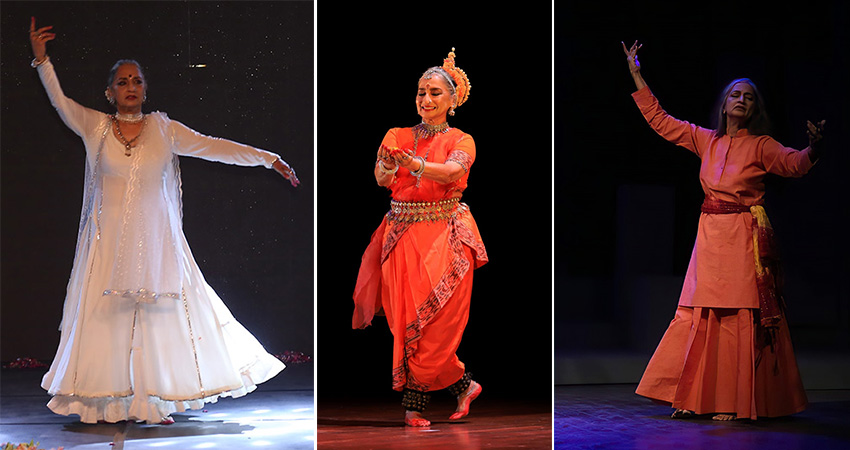
Kermani’s choreographic works are known for combining artistic excellence with profound social commentary. She believes that meaningful art must remain rooted in life itself. “I have never believed in art merely for art’s sake,” she says. At the same time, she is careful to distinguish art from propaganda. “There is a delicate balance between artistic excellence and political expression.” She points to masterpieces such as Picasso’s Guernica and Pablo Neruda’s poetry as examples of works that are both politically powerful and artistically timeless. In her own creative practice, she insists that aesthetics and artistic integrity must always remain at the forefront.
International audiences, she notes, have often responded with admiration and surprise. “Because Pakistan is usually portrayed negatively, many people are astonished to discover that such rich classical dance traditions continue to flourish there,” she says. What begins as curiosity often transforms into appreciation, allowing audiences to see another dimension of Pakistani culture. She considers these performances an opportunity to build cultural understanding and present a more nuanced image of her country.
In today’s digital age, where social media encourages instant visibility and rapid learning, Kermani urges young dancers to value patience and discipline. She remains a passionate advocate of the traditional Guru-Shishya Parampara. “Classical dance cannot truly be learned through online platforms alone,” she says. “These art forms require years of dedication, personal guidance, and sustained practice.” According to her, traditional training shapes not only a dancer’s technique but also the student’s character and outlook on life.
For Kermani, dance also possesses an extraordinary healing power. “Dance awakens vitality, brings people together, and creates dialogue where words often fail,” she explains. In societies fractured by conflict and division, she believes movement can rebuild human connections and remind people of their shared humanity.
Alongside her career as a dancer, Kermani has also enjoyed success as an actress on stage and television. While both disciplines rely on emotional communication, she explains that each demands a different vocabulary. Stage performances require expansive gestures and expressions to reach distant audiences, whereas the camera captures the slightest nuance. “Yet ultimately both seek the same goal-to evoke emotion and communicate truth,” she says.
As she reflects on her remarkable journey, Kermani hopes her legacy will extend far beyond awards or performances. “I would like to be remembered as someone who preserved the purity and dignity of classical dance while remaining steadfast in the pursuit of truth, equality, and justice,” Kermani says. If future generations come to see art not merely as entertainment but as a powerful force for courage, compassion, and positive social change, then, in her eyes, her life’s work will have truly fulfilled its purpose.