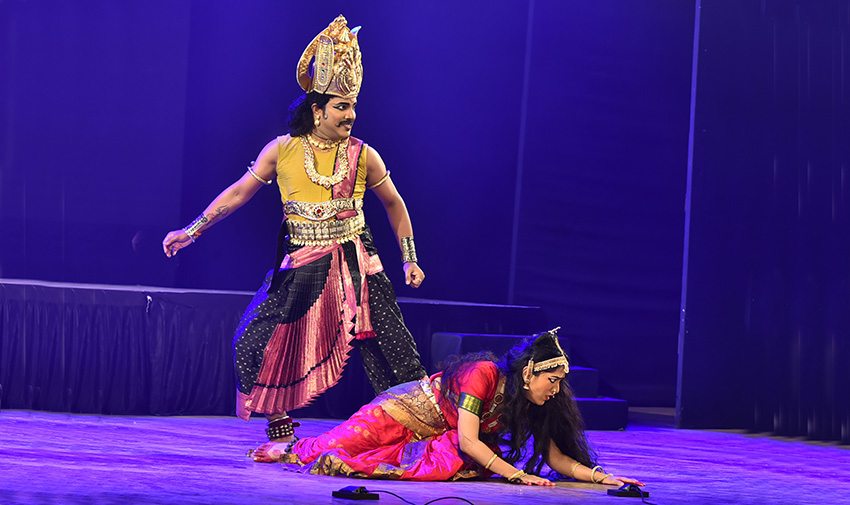
Sangeeta Das Banerjee is an accomplished photographer and filmmaker whose journey from economics to visual storytelling has been shaped by her enduring love for dance. Associated with One Frame Story, she has extensively documented Indian classical dance, theatre, cultural events, and performing artists.
 For Sangeeta, dance photography is not merely about freezing a moment but about capturing the spirit behind the movement. “As a dancer, I’ve always been obsessed with movement and completely in awe of how dynamic the human form can be,” she says. Her interest in photographing dancers grew when she noticed what she felt was missing in much of dance photography. “Too many shots missed the true power, precision, and emotional depth of what it actually feels like to dance,” she explains, adding that photographs often failed to capture “the fluid grace, and explosive energy of the dancers.” She realised that “dance wasn’t being showcased to its full potential.”
When she began studying photography, her primary focus was how best to capture dance, particularly under challenging stage conditions and low light. “I used to be that one student in class, always asking questions to the professor about movement and how best to capture it,” she recalls. Her objective was to combine her physical understanding of dance with photography. “I wanted to use my own training as a dancer, the physical understanding of timing and form, to capture dancers in ways that honour their true technique, years of training in the most authentic way.”
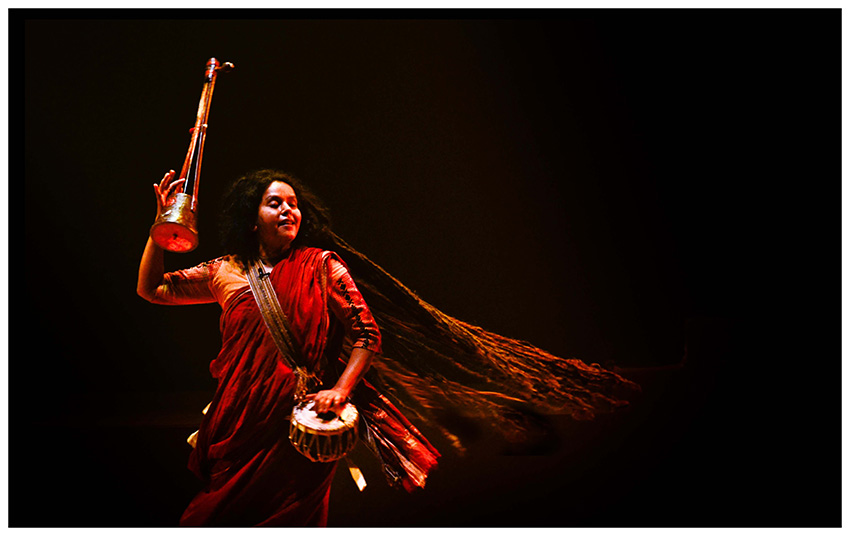
In fact, she describes her journey with characteristic simplicity: “I studied photography to capture dance and in the process got the gift of photography in my life!” Although she now undertakes several kinds of photographic projects, she admits, “Dance photography remains closest to the heart. A dancer remains a dancer always, either on stage or off it!”
Her connection with dance goes back to childhood. “I have loved dancing since I was a baby. Dance gave me and still gives me the joy that almost nothing else can,” she says. She formally trained in Kathak and Bharatanatyam until Class 8, but had to discontinue because of a medical condition that caused severe pain while dancing. Years later, while on a sabbatical from her professional life to care for her family, the desire to return to dance resurfaced. She approached the Yamini School of Dance, but was told that she was too old to begin training again. “I was in my late 20s,” she recalls. That experience strengthened her resolve. “I told myself, once dance was taken away from me, and I had no choice in it…but not again.”
She subsequently joined Danceworx, where she trained in jazz, contemporary, modern, and ballet for 15 years, while also learning social dancing from Salsa India. “One of the golden periods of my life for sure,” she remembers. When medical complications later brought her dancing to another halt, photography offered her a new connection with the art she loved. “I felt the universe had given me a way to stay in touch with something I love so much, dance, now through photography,” she says. “So that is how my transition from dance to photography happened.”
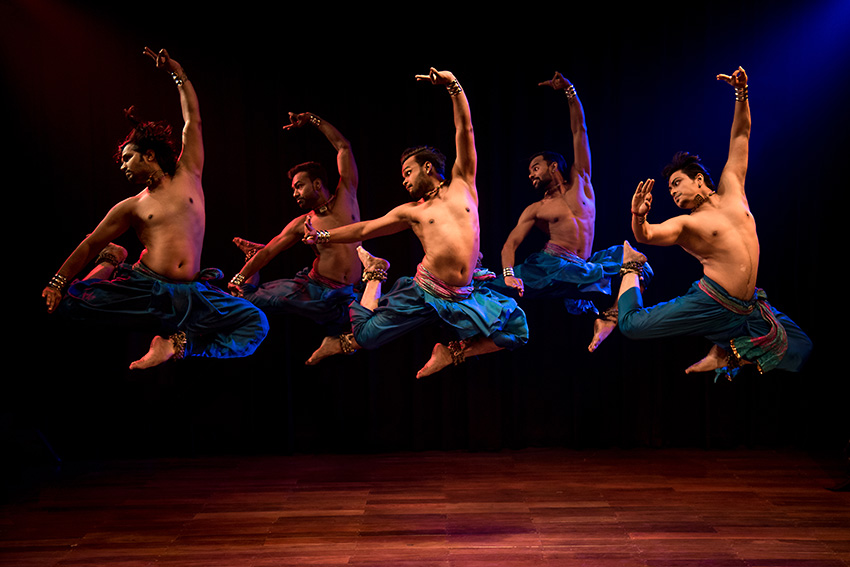
For Sangeeta, a photographer does not necessarily have to be a dancer, but must understand the art form being photographed. “For any kind of photography, it is important to know and have knowledge about what one is photographing,” she believes.
She compares the camera to “the paintbrush of an artist” and says that understanding dance enables a photographer to create more than a technical record. “One may not have to be a dancer to photograph dance but there is no denying it helps immensely, if one has or is a dancer,” she says.
Knowledge of “music and rhythm” helps a photographer become “sharp and on point with the timing.” Her advice to aspiring dance photographers is simple: “Watch dance, study dance and let oneself fall in love with dance.”
Among the many artists she has photographed, two legends remain particularly close to her heart: Padma Vibhushan Pandit Birju Maharaj and Padma Shri Astad Deboo. “Two names immediately popped up in my mind,” she says. By the time she photographed Maharaj Ji, he had stopped giving active stage performances, but she captured him during workshops and intimate mehfil settings. “He was magical,” she recalls. “His abhinaya, I am yet to see another come even remotely close. His eyes used to speak a thousand words.”
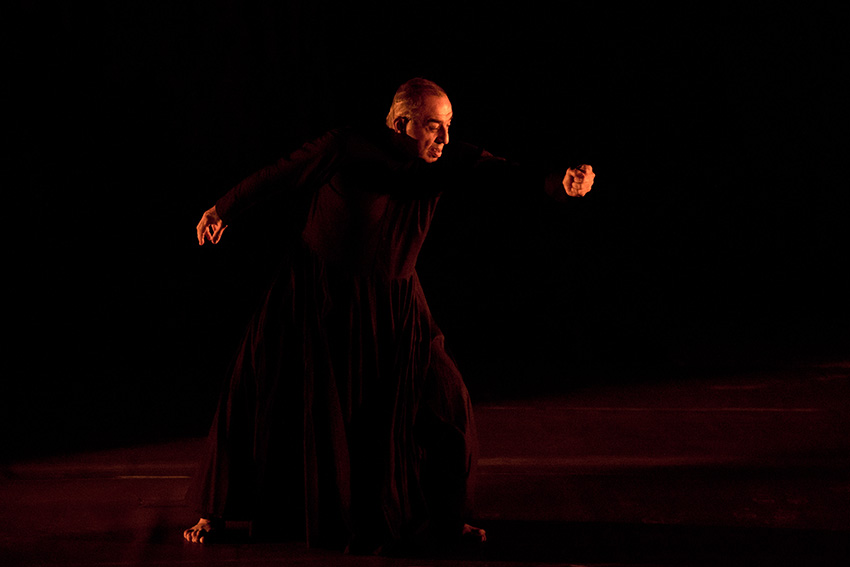
She was equally moved by the opportunity to photograph Astad Deboo. “The fluidity of his movements. Abstract and eclectic but so rooted at the same time, movements completely personal,” she says, describing how he created “a language and literature of dance” through his choreographies and life experiences. Reflecting on both encounters, she admits, “I cried tears of joy to have gotten the opportunity of capturing them.” These interactions, she says, remain “memories etched deep into my heart forever.”
Sangeeta believes dance photography in India has evolved significantly—from being primarily a record-keeping exercise to becoming an art form in its own right. “Dance photography is no more just for documentation purposes,” she observes. With technological advancement and greater artistic understanding, photographers can now capture “speed, precision, and narrative intent,” along with “atmospheric depth, lighting design, and raw athletic emotion.” For her, the best images reveal “the fluidity, tension, and narrative of movement.” She is also encouraged by the growing recognition of dance photographers in publicity and PR.
Her advice to budding photographers combines artistic discipline with professional ethics: “Spend time studying different dance forms,” understand the peak of a movement, and “prioritize form and emotion equally.” She urges photographers to respect performers, venues, official photographers, and stage protocols. “Never compromise a dancer’s safety for a dramatic angle,” she cautions, and advises newcomers to seek permission when necessary.
She also believes photographers should value their own work: “If any of your shots are used by any organization, dancer or artist, take some kind of remuneration for that. Only when you respect yourself as an artist would the world choose to do the same.” And her final message is perhaps the simplest and most inspiring: “Go and shoot, shoot and shoot!”