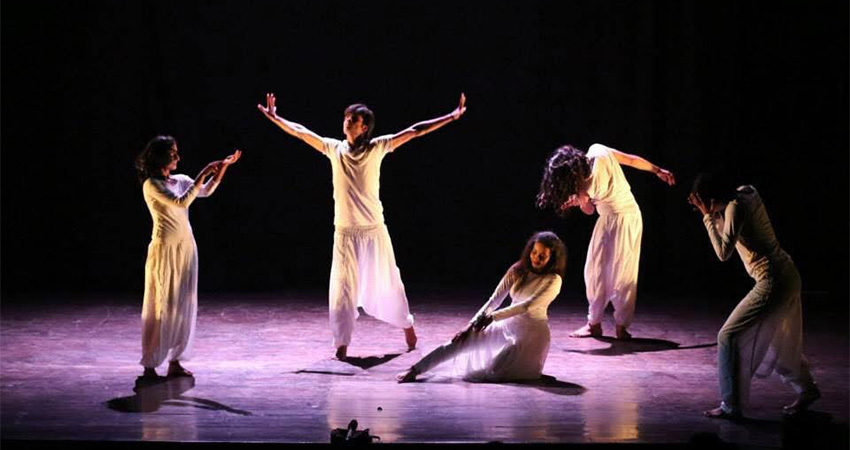
From a French folk-dance enthusiast to a teacher at the National School of Drama, Dr. Gilles Chuyen’s journey with dance has been shaped by curiosity, cultural exploration and a deep connection with India. Born in France, Dr. Gilles Chuyen is a dancer, choreographer, actor and movement practitioner who has been based in India since 1994. Trained in French folk dance, Modern Jazz, ballet and contemporary dance, he later explored Indian dance traditions, including Chhau Mayurbhanj, Bharatanatyam and Kuchipudi, along with yoga and meditation.
 Over the years, Chuyen has choreographed more than 50 plays and musicals and worked extensively across theatre, contemporary movement and Bollywood productions. He is also the founder of In Step Dance Company, through which he explores dance as a medium of energy, expression and inner connection. Since 1998, he has been associated with the National School of Drama (NSD), New Delhi, as a Guest Faculty member, teaching movement, choreography and physical approaches to performance.
A journey that began in childhood
For Chuyen, dance began almost instinctively. His mother recalls that, as a toddler, he responded to music and danced even before he could walk. By the age of six, he was already choreographing small shows with his cousins and friends.
His formal training began with the folk dances of Provence in southern France. Between the ages of nine and fourteen, he learned the traditional dances at school and performed in shows organised in neighbouring villages.
A major turning point came in 1984, when he met his dance guru Evelyne Leclercq in Hyères. Under her guidance, he embarked on what he describes as a “magical journey” through Modern Jazz and Ballet, discovering both technique and self-expression.
At university in Aix-en-Provence, he continued his ballet training with teachers from the Kirov tradition, including the Lazarovs, while deepening his knowledge of Modern Jazz. He performed and competed with local dance groups, training in Modern Jazz from the age of 12 to 24 and ballet from 14 to 24.
His interest soon expanded towards contemporary dance. Performances and workshops at the Châteauvallon Performing Arts Centre introduced him to new approaches to movement, with the work of Maurice Béjart leaving a particularly strong impression on him.
Discovering Indian aesthetics
Chuyen’s growing interest in India began even before he moved to the country. While studying Political Science, he started learning Hindi and developed an interest in Indian culture and civilisation. To understand Indian aesthetics more deeply, he trained in Bharatanatyam and Kuchipudi for two years each.
At 24, he took the decisive step of leaving France for India.
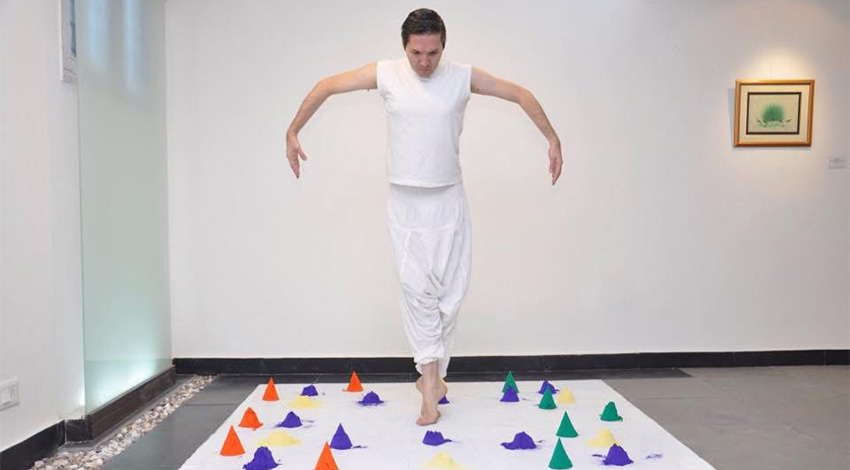
His first professional association with India came through the Cultural Section of the Embassy of France in New Delhi, where he worked for more than a year as part of his National Service. After spending six months back in France, he returned to Delhi on a scholarship from the French Ministry of Foreign Affairs to pursue Ph.D. research in Political Science.
His research on contemporary Brahmin identity took him across Uttar Pradesh and Tamil Nadu. Travelling, studying ancient texts and conducting interviews in both English and Hindi gave him an opportunity to engage with India beyond the surface.
Around the same period, his meeting with Sri Sri Ravi Shankar also marked the beginning of his spiritual journey.
The colours and stories of India
What continues to fascinate Chuyen about India is its extraordinary diversity. He describes himself as a highly visual person and recalls associating words with colours as a child. This sensitivity to colour and emotion has shaped his response to Indian culture.
For him, India offers a “rainbow of experiences” and an enormous spectrum of traditions, stories and artistic expressions. He is particularly drawn to Indian mythology and the storytelling dimensions of dance, including the life lessons embedded within its narratives.
“India is more than just a country; it is a subcontinent,” his journey suggests, and its vast range of dance traditions has continued to inspire him.
His work in India has exposed him to several folk and traditional forms. While choreographing Bollywood musicals directed by Sanjoy Roy, he encountered Bhangra, Dandiya and Garba. He also trained in Chhau Mayurbhanj under Shashidharan Nair at the Shriram Bharatiya Kala Kendra and explored Naga culture and dance while working on productions for the Hornbill Festival.
Dance meets theatre at NSD
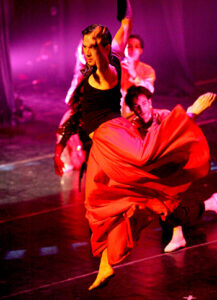 Chuyen’s association with the National School of Drama has been one of the significant chapters of his professional journey in India. He has been a Guest Faculty member at NSD since 1998.
He enjoys teaching movement, conducting workshops based on different dance vocabularies and choreographing for theatrical productions. His approach reflects his belief that the body is an essential instrument for an actor.
One of the projects he particularly values is a choreography workshop developed for NSD’s direction students. Through the workshop, students explore the various “ingredients” that go into creating dance.
According to Chuyen, dance can play a crucial role in an actor’s development. It brings life, structure and energy to the body while improving posture, stage presence, discipline, rhythm and expression. These qualities, he believes, contribute to a richer and more layered performance.
Changing faces of cinema
Chuyen also observes the changing relationship between dance and acting in cinema. He believes that the skills expected from performers evolve alongside changing film genres and cinematic styles.
Looking at the West, he points to the transition from silent cinema, when performers relied heavily on physical expression and facial gestures, to the era of sound, which demanded greater attention to voice and speech modulation. The iconic film Singin’ in the Rain, he notes, captures this transformation.
In Bollywood too, he sees a gradual change. While actresses are still frequently selected for their appearance and dancing abilities, Chuyen is encouraged by the growing presence of professionally trained actors capable of handling complex characters and narratives.
Some of these performers, he says, are his friends or former students from NSD. Their success represents, for him, the value of comprehensive training—where movement, expression, voice and acting come together to create a complete performer.
From the folk traditions of Provence to the diverse dance landscape of India, Gilles Chuyen’s journey demonstrates how dance can transcend geographical and cultural boundaries. For him, movement is not merely a performing art; it is a means of discovering cultures, understanding the body and connecting with the world around us.