Our recent article Beyond the Stage: Nalanda Launches ‘Kala Prabandha’ Course opened a larger conversation about the professional support artists need beyond formal training and performance opportunities. Taking that discussion forward, Nina Buddhdev, founder of The BANDISH Network, examines how mentorship, professional networks and cultural festivals can contribute to an artist’s long-term development. In this reflective response, she argues that a healthy arts ecosystem must build not only visibility for artists, but also knowledge, confidence and professional capacity.
The launch of Nalanda Nritya Kala Mahavidyalaya’s Kala Prabandha course, as highlighted by ClassicalClaps, raises a question that deserves considerably more attention across the Indian classical arts sector: what does it take to support an artist over the course of a career?
For generations, Indian classical artists have been understood primarily through the lens of artistic training. The guru, the discipline, the repertoire, the years of practice and the eventual opportunity to perform have formed the essential architecture of an artist’s development.
That architecture remains fundamental. However, the professional environment in which artists work has changed considerably. The demands placed upon an artist now extend well beyond artistic excellence. Artists must navigate institutions, presenters, funding systems, audiences, communication, touring, contracts, international markets and the increasingly complex realities of sustaining a professional life in the arts.
Yet the support available to artists in these areas remains uneven and often dependent upon personal networks.
This is why Kala Prabandha is significant. It recognises that artist development is not a peripheral concern but an essential component of a functioning arts ecosystem. I would argue that this principle must be extended further. Artist development, mentorship and professional knowledge should also become important responsibilities of festivals, cultural institutions and professional networks.
The artist needs more than a stage
We have become good at creating opportunities for artists to perform. We now need to become equally intentional about creating opportunities for them to develop.
A performance provides visibility and experience. It can bring income, recognition and an audience. But it does not necessarily provide an artist with the knowledge required to make the next strategic decision in a career.
What should I pursue next? Is this the right opportunity for me? How should I develop this idea? How do I approach an institution? How do I prepare for an international market? How should I negotiate the terms of an engagement? How do I think about the next five years rather than merely the next performance?
These are professional questions, but they are also artistic questions. The quality of the decisions an artist makes can profoundly influence the trajectory of a career.
The knowledge required to answer them often comes through conversations with people who have navigated the sector before—experienced artists, presenters, programmers, producers, funders, curators, educators and cultural administrators.
It comes, in other words, through mentorship.
Mentorship is part of the infrastructure
Mentorship is sometimes treated as an additional benefit offered to emerging artists. That is too limited an understanding of its value.
A strong mentor does not simply provide advice. A good mentor helps an artist develop judgement, and that distinction is critical.
The arts are full of ambiguity. There is rarely one correct pathway. Artists encounter competing opportunities, institutions with different expectations, changing markets, financial constraints and artistic pressures. Some decisions may have consequences years into the future.
Experience matters in navigating this complexity. A mentor can help an artist understand context, recognise an opportunity, identify a risk, articulate an ambition and make decisions with greater confidence.
This is particularly important for young Indian classical artists who may have received exceptional artistic training but limited exposure to the professional structures surrounding the field. They should not have to learn everything through trial and error. Nor should access to professional knowledge depend entirely upon whether an artist happens to know the right person.
Mentorship must therefore be understood as part of the infrastructure of artistic development—not as a luxury available to a fortunate few.
Turning private knowledge into a shared resource
There is extraordinary knowledge within the Indian classical arts, but much of it remains distributed across individuals and institutions.
One person understands international touring. Another understands presenting or funding. Someone else has decades of experience navigating institutions, while another has developed audiences or worked across different cultural markets.
The challenge is not always a lack of knowledge. The challenge is how that knowledge is transferred.
This is where networks can play an important role. They can create mechanisms through which information, experience and professional relationships circulate. They can make professional conversations possible, improve the visibility of artists and reduce the distance between those seeking guidance and those equipped to offer it.
Through my work as the founder of The BANDISH Network, I have seen the importance of connecting artists, presenters, programmers, cultural workers and organisations. The value of such a network lies not simply in the number of people connected, but in whether those connections enable artists to access knowledge, develop relationships and make more informed professional decisions.
BANDISH is one attempt at building this connective infrastructure; it is not the only possible model. Festivals, educational institutions, arts organisations and other networks can develop their own ways of sharing knowledge and widening access. When professional knowledge is treated as a shared resource rather than a private advantage, artists gain greater agency.
Preparing artists for international engagement
This becomes even more important as Indian classical artists engage with professional markets across Canada, the United States, Europe and other parts of the world.
The question should not simply be how many artists can be presented internationally. It should also be whether artists are adequately prepared to understand and navigate those markets.
International engagement requires cultural and professional fluency. Artists need to understand how presenting ecosystems operate, how programmers assess work, how professional relationships are established, what institutions require, how touring can be structured and how funding systems function. They must also understand how to position and communicate their work within an unfamiliar professional environment.
None of this diminishes the artistic integrity of the work. On the contrary, it gives artists greater agency.
An artist who understands the ecosystem is better positioned to decide where to perform, whom to work with, which opportunities to pursue and which to decline. That understanding is a form of empowerment.
Festivals must look beyond performance
Festivals are among the few occasions when artists, presenters, programmers, cultural leaders, mentors and emerging practitioners can be brought together in one place. That is an extraordinary resource, and it should be used deliberately.
A festival should not simply programme an artist and then send them back into the ecosystem from which they came. It should also create opportunities for artists to learn from the people assembled around them.
This does not necessarily require elaborate programming. A well-moderated conversation with an experienced presenter can be valuable. A small mentorship session can offer direction. A discussion with a senior artist about career decisions can provide a perspective that an emerging practitioner might otherwise take years to acquire.
A conversation about international markets can demystify a system that previously appeared inaccessible. A session with an experienced producer can change how an artist approaches the next project.
These are relatively modest interventions, but their impact can be significant when they are intentional.
Bringing the right people together at the right moment can be one of the most effective forms of sector development. It creates access, reduces the distance between generations and allows knowledge to move horizontally as well as vertically. It also helps presenters and institutions understand the realities facing artists.
Most importantly, it allows artists to feel part of a larger professional ecosystem rather than having to navigate their careers in isolation.
Artist development is a continuum
Artist development is often considered something that happens only at the beginning of a career. That understanding is too narrow.
Artists require different forms of support at different stages. An emerging artist may need mentorship around developing a professional identity and understanding the sector. A mid-career artist may need assistance in developing a larger body of work, entering new markets, managing increased demand or making a strategic transition.
An established artist may need opportunities to reflect upon leadership, succession, teaching, institutional engagement or the next phase of artistic practice.
Artist development is therefore not a single programme. It is a continuum, and the strongest cultural ecosystems recognise this.
Measuring what a festival strengthens
Festivals are traditionally measured through immediate outcomes: attendance, ticket sales, artistic quality, media coverage, audience response and the visibility generated for participating artists. These measures remain important, but there is another level of impact worth considering.
What happens to an artist six months after the festival? What did the artist learn? Whom did they meet? Did they gain a better understanding of the professional landscape? Did they find a mentor or collaborator? Did they become more confident in making career decisions? Did the festival contribute to their long-term development?
These questions move us from measuring an event to measuring development.
Perhaps the most useful question for a festival is therefore not simply, “How many people came?” but “What did we strengthen?”
Did we strengthen the artist? Did we strengthen professional knowledge? Did we improve the relationship between artists and presenters? Did we build the capacity of emerging practitioners? Did we create knowledge that will continue to circulate?
Such outcomes may not be immediately visible. They may not appear in a festival report or produce an instant headline. Over time, however, they help determine whether an arts ecosystem becomes resilient.
From visibility to capacity
The Indian classical arts do not need to be reinvented. They need to be better supported.
The artistic knowledge is profound and the practitioners are deeply committed. Artists are already creating work, building audiences, teaching, touring, collaborating and developing their practices in sophisticated ways.
The challenge is not to tell artists what they should create. It is to ensure that they have the knowledge, mentorship and professional support necessary to determine their own paths with greater agency.
Infrastructure does not mean only buildings, organisations, technology or funding. It also includes people, knowledge, relationships, mentorship, professional pathways and systems of support. This may be the less visible infrastructure of the arts, but it is among the most important.
The conversation around Kala Prabandha reminds us that investing in artists means investing in the whole person and the whole career—not simply the performance. It also suggests a larger responsibility for festivals, institutions and professional networks.
If we have the capacity to bring people together, we also have the capacity to facilitate learning. If we have the resources to programme artists, we should consider how we can support their development. If we convene a field, we should ask what knowledge can be exchanged within it.
Festivals can be the catalyst. Mentorship can provide continuity. Networks can provide the connective tissue. Artist development can build long-term capacity.
The ultimate measure of a healthy cultural ecosystem is not simply how many artists it can put on a stage. It is whether artists are better equipped, over time, to determine the direction of their careers and contribute to the future of their art forms.
We must move from moments to continuity, from visibility to capacity and from asking only what happened at a festival to asking what the festival made possible afterwards.
That is where the lasting value of cultural convening lies.
About Author:
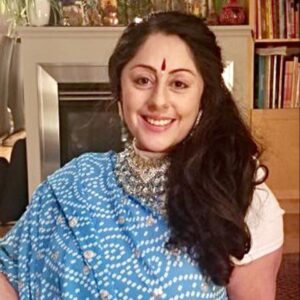
Nina Buddhdev is a practising artist, Cultural Strategy & Arts Development Consultant, mentor, and speaker whose work focuses on the evolving landscape of classical, heritage, and culturally rooted arts. For more than 30 years, she has worked across the ponds, building bridges for artists, presenters, communities, institutions, and strategic partners.
As the founder of the BANDISH Network, a 7,500+ member group, Nina champions meaningful representation, integrated programming, artist development, and cross-sector collaboration for classical and heritage arts rooted in the Indus Valley and Pan-South Asian traditions.
A deep listener and advocate for genuine allyship, Nina brings a relational and strategic approach to identifying overlooked needs and creating pathways for artists and communities to participate with greater confidence, agency, and belonging. Her work is grounded in the belief that heritage arts are living, evolving practices, and that their future depends on respectful representation, thoughtful adaptation, meaningful partnerships, and sustainable opportunities for the next generation.