In earlier eras, access to Indian Classical Music was shaped by identifiable gatekeepers.
In the Darbar, it was the patron.
In the broadcast era, institutions such as All India Radio determined who would be heard.
In the concert circuit, organizers and sabhas curated opportunity.
While these systems had limitations, the gatekeeping structures were visible and, to an extent, culturally informed.
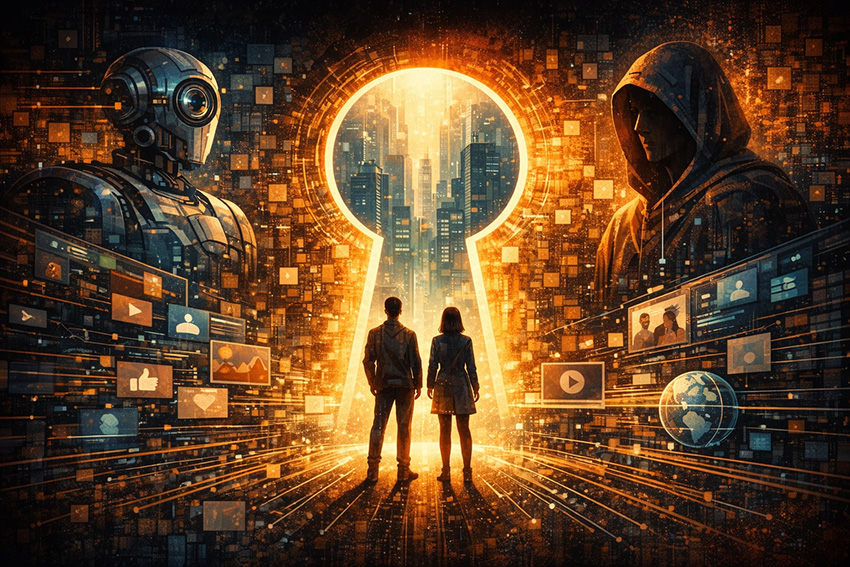
The digital era has introduced a new kind of gatekeeper — less visible, but far more influential.
Algorithms.
On platforms such as YouTube and Spotify, visibility is largely determined by recommendation systems. These systems analyze user behaviour — watch time, engagement patterns, frequency of listening — and use this data to decide what content is promoted.
At one level, this creates efficiency. Content that engages audiences is amplified. Listeners discover new material without active search.
However, this model also introduces a fundamental question:
Can an algorithm understand depth?
Indian Classical Music is not designed for instant consumption. Its essence lies in gradual unfolding — in patience, repetition, and subtlety. The emotional and aesthetic value of a raga may not be immediately measurable through clicks, likes, or retention curves.
This creates a structural imbalance.
Content that is shorter, more visually engaging, or immediately appealing may receive higher visibility, while deeper, more time-intensive performances may remain less discoverable.
Over time, such patterns can influence listening habits.
If discovery is driven primarily by engagement metrics, there is a possibility that audience preferences gradually shift towards formats that align with algorithmic logic rather than artistic depth.
This is not a question of right or wrong.
It is a question of balance.
Algorithms are not inherently biased; they are designed to optimize measurable outcomes. But culture is not always measurable in immediate terms. Some forms of art require time, context, and immersion.
The concern, therefore, is not about technology replacing tradition. It is about ensuring that the design of digital systems does not unintentionally marginalize forms of expression that do not conform to dominant consumption patterns.
This brings us to a larger idea — cultural responsibility within the Digital Ecosystem.
If platforms influence visibility, then institutions, artists, and cultural thinkers must actively participate in shaping how classical music is presented, categorized, and recommended.
Curation, contextualization, and conscious digital design become essential.
The future of Indian Classical Music will not depend only on how well it is performed.
It will also depend on how fairly it is represented within systems that increasingly mediate cultural access.
In every era, gatekeepers have existed.
The difference today is that they are invisible.
Recognizing their influence is the first step towards ensuring that depth, diversity, and cultural integrity continue to find space within the digital landscape.
In the next article, we will explore the role of Artificial Intelligence in Indian Classical Music — examining both its potential and the ethical questions it raises for artists, institutions, and the larger ecosystem.
Read previous article in the series : Data as Heritage: Metadata, Archiving, and the Future of Raga Knowledge Systems