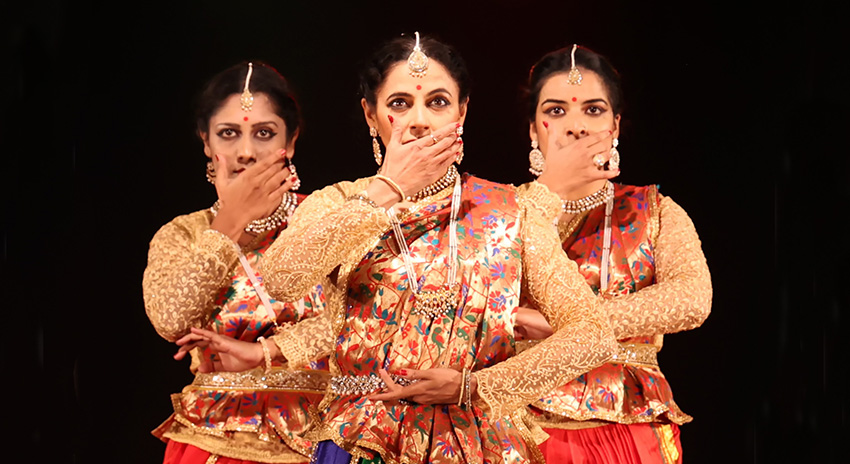
An artist who stands as a compelling force in the world of Kathak, who seamlessly bridges performance, pedagogy, and creative vision is Sharvari Jamenis. A senior disciple of the legendary Rohini Bhate, she carries forward a rich legacy while shaping her own distinct artistic voice. With equal command on stage and screen, Sharvari has carved a rare space where tradition meets contemporary thought. As the founder of the Sharvari Jamenis Dance Company, she has spent over a decade nurturing dancers with rigor, sensitivity, and purpose. Her journey is not just about excellence in dance, but about building a thoughtful, enduring artistic community. Excerpts from the interview:
Your institute recently celebrated 12 years with the showcase Prayaas. What was the idea behind this unique concept?
The idea of Prayaas came from the thought of celebrating not just a milestone, but the journey itself. Completing 12 years felt symbolic, so we decided to explore the significance of numbers from 1 to 12 through dance. Each number carries meaning—philosophical, cultural, or rhythmic—and we wanted to interpret that through Kathak. It was challenging but very fulfilling because every piece had a strong conceptual base while still allowing creative expression.
The thematic structure—from Aadishakti to 12 festivals—was quite diverse. How did you ensure coherence across all performances?
That was the most exciting part. Even though each number had a distinct theme, the connecting thread was the idea of “essence.” Whether it was the oneness of Ardhanarinateshwar, the simplicity of basic human needs, or the vibrancy of festivals, each piece reflected a deeper meaning tied to the number. Dance became the medium to unify these ideas. Also, careful planning ensured that each composition suited the age group and skill level of the students.
You involved your senior disciples as choreographers as well. Why was that important to you?
As a teacher, I strongly believe that learning should evolve into creation. I encouraged my senior students to choreograph because it pushes them out of their comfort zone. It allows them to think independently, explore movement vocabulary, and develop their artistic voice. I guided them, of course, but the process was theirs—and I’m very proud of how beautifully they rose to the occasion.
Your students range from 7 to 51 years old. How do you approach teaching such a diverse group?
Every student is different—not just in age, but in capacity, understanding, and emotional depth. Teaching is not about imposing a style; it’s about bringing out the best in each individual. I design lessons and choreography keeping their abilities in mind, so they feel challenged but not overwhelmed. Personal attention is very important to me. That’s how confidence and commitment are built.
You trained under the legendary Pt. Rohini Bhate. How has her influence shaped your journey?
Guru Rohini Bhate was not just a teacher; she was a guiding force. Her approach to Kathak was deeply intellectual yet emotionally rich. She taught us discipline, sincerity, and the importance of understanding the art beyond technique. I try to carry forward her values in my own teaching. Whether it’s the rigor of riyaaz or the depth of expression, her influence is always present in my work.
You began teaching relatively later in your career. What informed that decision?
I have always believed that teaching is a huge responsibility. In my early years, I was deeply immersed in performing, practicing for long hours, and working on various projects. I didn’t want to teach unless I could give it my complete attention. When I finally started, I was ready—mentally and artistically—to commit to my students fully. These 12 years have been incredibly rewarding because of that clarity.
The institute follows an interesting system—alternating between exams and showcase years. What is the thought behind this?
Balance is essential. Exams help students build technical strength, discipline, and academic understanding of dance. Showcases, on the other hand, give them stage experience and artistic exposure. By alternating between the two, students get the best of both worlds. They are not just performers but well-rounded dancers who understand their art deeply.
You emphasize “quality over quantity.” How does that reflect in your teaching?
It’s a principle I truly believe in. I would rather have a smaller group of dedicated, well-trained students than a large number without depth. Quality reflects in the clarity of technique, the maturity of expression, and the sincerity towards the art form. Many of my students have pursued higher education in Kathak, and that commitment is what matters most to me.
Looking back at Prayaas, what was the most memorable moment for you?
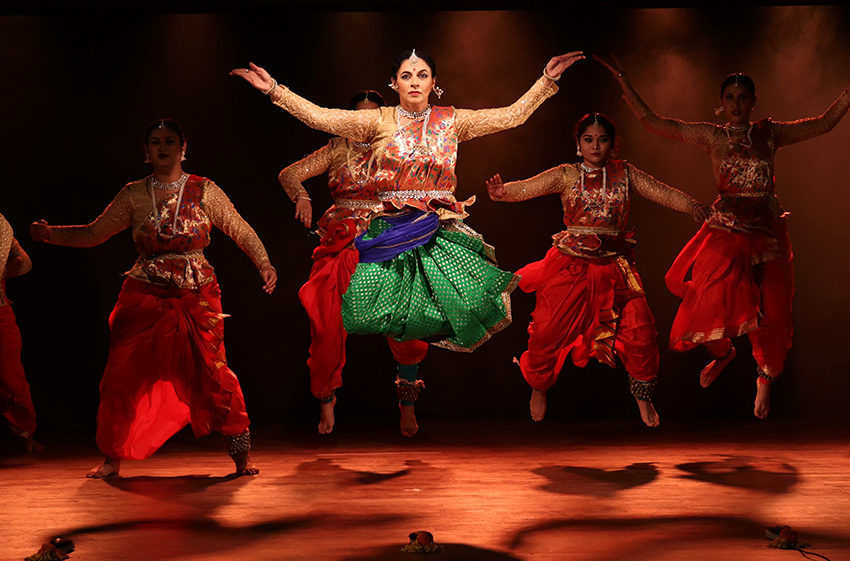
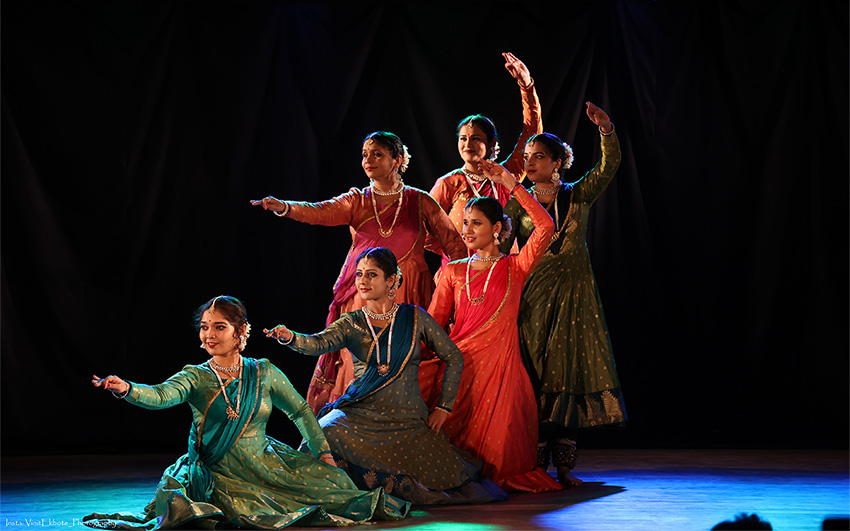
The final piece—12 San 12 Maas—was incredibly special. Seeing all 60 students come together on stage, celebrating the festivals and concluding with Holi, was emotional. It wasn’t just a performance; it was a celebration of 12 years of shared effort, growth, and love for dance. Moments like these make everything worthwhile.
What lies ahead for you and your institute?
The journey continues. I want to keep exploring new ideas while staying rooted in tradition. My focus will always remain on nurturing sincere dancers and carrying forward my Guru’s legacy. Dance is a lifelong sadhana, and I feel grateful to be walking this path with my students.