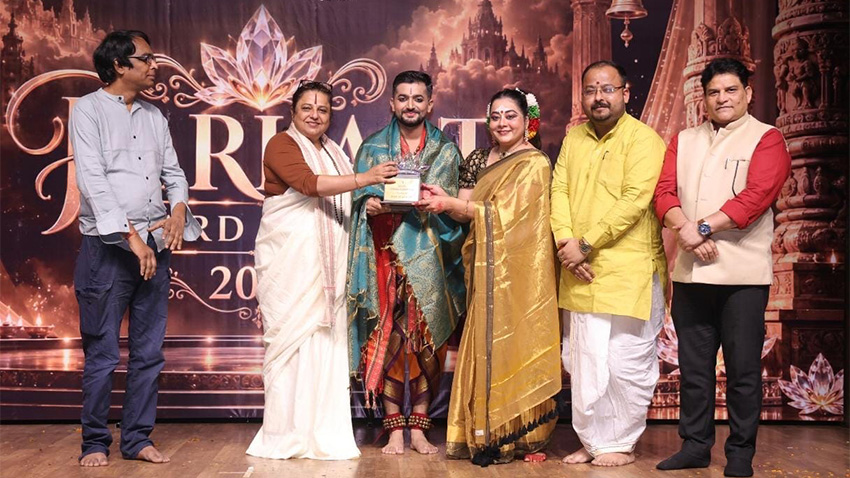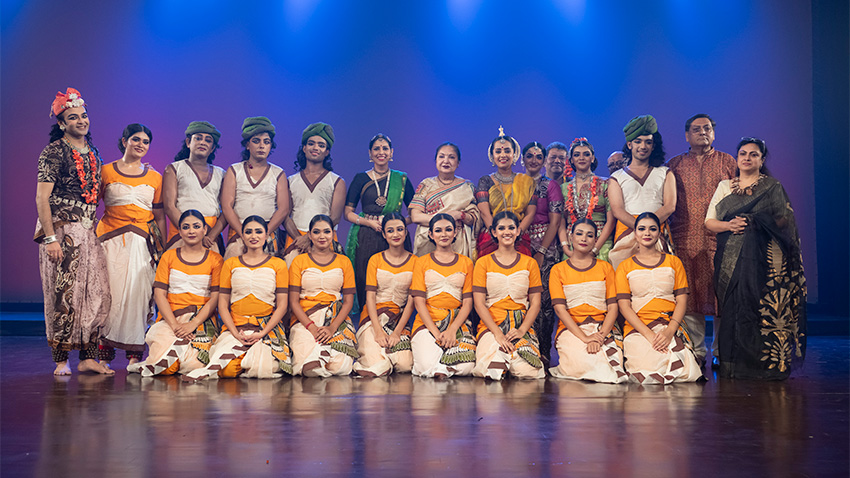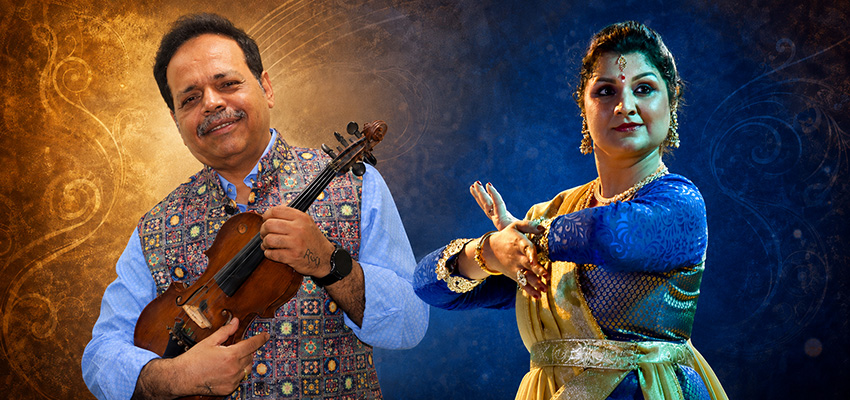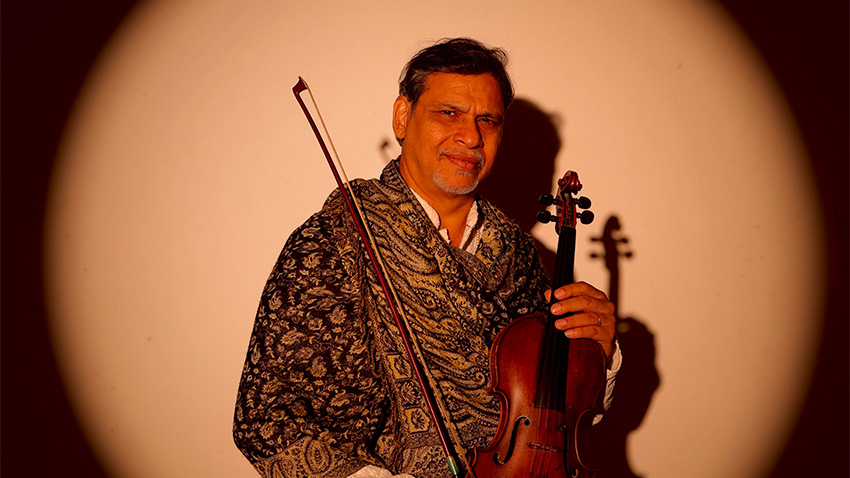
For India’s performing arts community, the Sangeet Natak Akademi Awards are never just a list of names. They are moments of collective memory.
Every name carries years of riyaaz, rehearsals, travel, teaching, scholarship, uncertainty, applause, silence, struggle and surrender. Behind each awardee is not only an individual artiste, but also a guru, a parampara, a classroom, a stage, an accompanist, a family, an audience, and often, a lifetime of invisible labour.
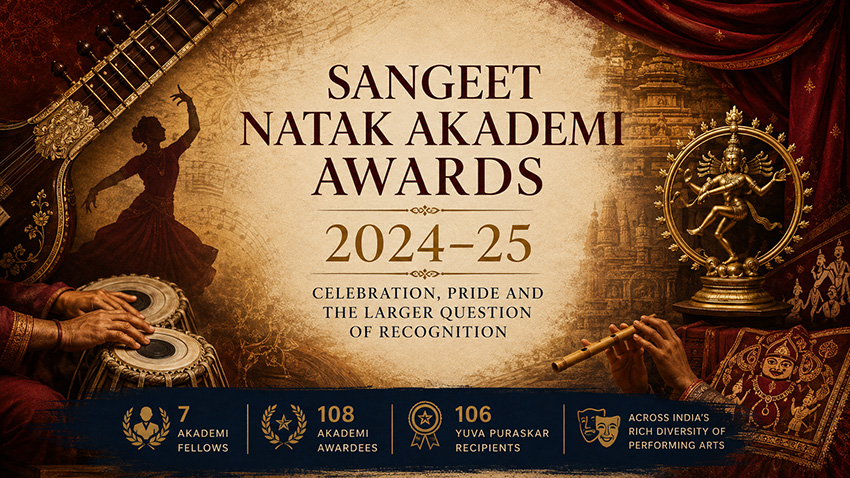
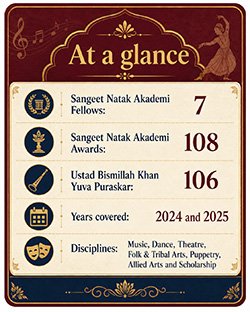
The recent announcement of the Sangeet Natak Akademi Fellowships, Akademi Awards and Ustad Bismillah Khan Yuva Puraskar for 2024 and 2025 has therefore brought both celebration and conversation. The Akademi has announced seven Akademi Fellows, 108 Akademi Puraskar awardees and 106 recipients of the Ustad Bismillah Khan Yuva Puraskar across music, dance, theatre, folk and tribal arts, puppetry, allied arts and scholarship.
 On the surface, it is an announcement of honours. In spirit, it is a reminder of how vast, diverse and deeply layered India’s performing arts ecosystem continues to be.
The awardees represent Hindustani and Carnatic music, classical dance forms such as Bharatanatyam, Kathak, Odissi, Kuchipudi, Mohiniyattam and Sattriya, theatre, puppetry, folk traditions, tribal expressions, instrument-making, art criticism and research. The list reads like a cultural map of India — from metropolitan stages to regional gurukuls, from celebrated concert platforms to community spaces where traditions survive with little visibility but immense conviction.
The combined announcement also brings into focus the generational continuum within India’s performing arts. The Akademi Fellowships honour senior masters whose work has shaped artistic thought and practice over decades. The Akademi Awards recognise established artistes and scholars who have contributed substantially to their fields. The Ustad Bismillah Khan Yuva Puraskar, meanwhile, brings younger practitioners into the national spotlight. Read together, the lists show how tradition moves across generations — from the guru to the practising artiste to the young seeker.
This continuum is important because Indian performing arts do not survive through performance alone. They survive through transmission. A composition, a bani, a movement vocabulary, a theatre practice, a ritual form or a folk expression becomes meaningful only when it is carried forward with understanding, discipline and imagination.
The social media response to the announcement has reflected this emotional weight. Across platforms, disciples have posted photographs with their gurus, institutions have celebrated alumni and faculty, rasikas have recalled memorable performances, and regional communities have taken pride in seeing artistes from their cultural landscapes receive national recognition. For many, these awards are not only personal milestones but moments of shared belonging.
There is a special joy when an artiste from a less commercially visible tradition is recognised nationally. Such moments remind us that India’s cultural strength does not live only in large auditoriums, festivals or digital popularity. It lives equally in small towns, temple courtyards, community gatherings, rehearsal rooms, village performances and oral traditions passed from one generation to another.
At the same time, the online conversation has not been only celebratory. A section of artistes, rasikas and cultural observers has also raised questions about the delay in announcing awards for two years together, the opacity of the selection process, regional and disciplinary balance, and the need for clearer communication from national cultural institutions.
These questions should not be seen as negative interruptions in a moment of celebration. Rather, they show how deeply the performing arts community values these honours. People ask questions because the awards matter. They seek transparency because the institution carries national cultural responsibility. They expect timely recognition because, for many artistes, such honours arrive after decades of commitment.
The conversation around the Sangeet Natak Akademi Awards is not new. Over the years, national cultural awards have often been accompanied by quiet discussions within the artistic community — about delayed announcements, the visibility of the selection process, representation of different traditions and the clarity of public communication.
There have also been earlier moments when Sangeet Natak Akademi honours entered larger public debate. In 2015, theatre artiste Maya Krishna Rao returned her Sangeet Natak Akademi Award as part of the wider “award wapsi” moment, citing concerns over intolerance. In 2019, Kannada theatre artiste S. Raghunandana declined the Akademi Award, expressing anguish over mob lynching, violence and the shrinking space for dissent.
These incidents were not about the artistic merit of the awardees or the dignity of the awards themselves. They showed something larger: cultural recognition in India is often inseparable from the social and moral climate in which artistes live, create and respond.
Recognition in the arts has always had a complex relationship with time. Often, it comes late. Sometimes, it comes after an artiste has already given the best years of life to the art. In many cases, an award recognises not just performances, but endurance — the ability to continue despite limited patronage, uncertain income, shrinking attention spans and the demanding discipline of the arts.
This is why the Sangeet Natak Akademi Awards hold such emotional significance. They validate not only achievement, but also tapasya. They acknowledge those who chose depth over speed, practice over visibility, and tradition over convenience.
But precisely because the awards carry such weight, the process around them must inspire confidence. An honour of this stature does not merely decorate an individual career. It enters history. It affects lineages, institutions, students, archives and public memory. The process behind such recognition therefore needs to be seen as credible, timely and transparent.
To be fair, no award process in the arts can satisfy every expectation. The arts are subjective, layered and often deeply rooted in community networks. But this very subjectivity makes communication even more important. Clear timelines, accessible criteria, updated public records and better explanation of categories can strengthen trust without diminishing the dignity of the awards.
In today’s digital age, national cultural institutions also face a new responsibility. Announcements travel instantly. Reactions form immediately. Questions arise publicly. Silence, delay or lack of clarity can quickly create speculation. Thoughtful communication, on the other hand, can turn an announcement into a moment of collective celebration and institutional trust.
The present moment should therefore be seen as an opportunity. The celebration of awardees and the questions around process need not stand against each other. Both can coexist. One honours the artistes; the other asks how national cultural institutions can serve the arts with greater care, clarity and accountability.
For ClassicalClaps, this moment is also a reminder of the need to look beyond the headline. Awards are important, but the stories behind the awards are even more important. Who are these artistes? What journeys brought them here? Which traditions do they represent? What challenges did they overcome? What can younger generations learn from them?
The Sangeet Natak Akademi Awards 2024–25 should therefore be seen not merely as an announcement, but as an invitation — to listen more deeply, watch more carefully, document more responsibly and celebrate more generously.
At a time when attention spans are shrinking and cultural memory is often fragmented, these awards remind us that the performing arts still demand patience, devotion and depth. The applause may come in a ceremony, but the journey begins much earlier — in the first lesson, the first note, the first step, the first silence before performance.
In Indian performing arts, an award rarely belongs to one person alone. It belongs to the guru, the parampara, the accompanists, the students, the family, the audience and the ecosystem that allowed the art to survive.
The moment, therefore, is not one of celebration alone. It is also an opportunity to reflect on how India recognises its artistes, how transparently such recognition is communicated, and how carefully it is preserved in public memory.
It celebrates the artistes. It honours the traditions. And it reminds us that recognition, when given with care and communicated with clarity, becomes more than an award — it becomes cultural memory.