


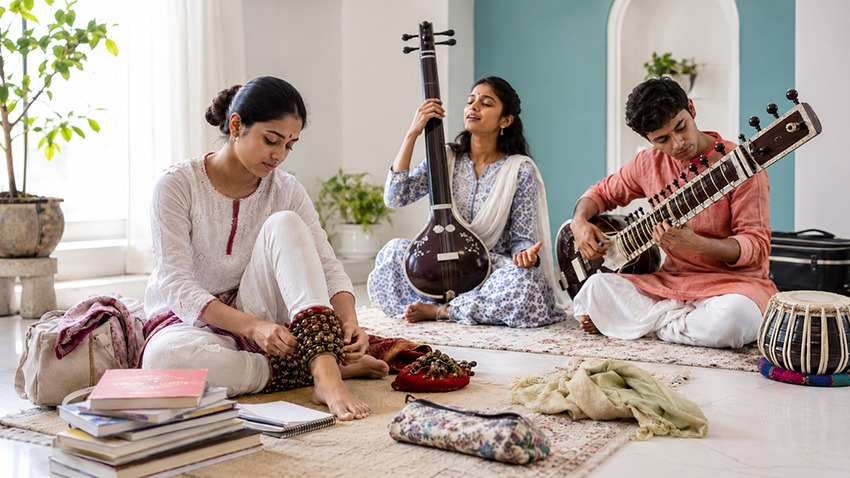
There was a time when learning Indian classical music or dance was spoken of almost entirely in terms of devotion, discipline and surrender. A student found a guru, began training, practised for years and gradually entered the world of performance, repertoire and tradition.
Today, the conversation sounds a little different.
Parents ask about monthly fees, costume expenses, examination charges, arangetram or manch pravesh budgets, workshop costs, accompanist fees, travel, photography, videography and social media promotion. Students compare online classes, institutional courses, private lessons and short-term intensives. Young artists wonder whether they can afford continued training while also paying for recordings, costumes and performance opportunities.
This raises an uncomfortable but necessary question: are classical arts becoming too expensive to learn?
The answer is not simple. In some ways, classical music and dance have become more accessible than ever. Online classes, digital archives, lecture-demonstrations and social media have opened doors for students across cities and countries. At the same time, serious training, stage presentation and professional development have become financially demanding.
The issue is not merely affordability. It is also about access, expectations and the changing economics of the arts.
The Real Cost of Learning
When people discuss the cost of classical training, they usually begin with tuition fees. But monthly class fees are only one part of the picture.
A student of classical dance may also need practice attire, ghungroos or salangai, costumes, jewellery, make-up, examination fees, workshop participation, rehearsal space, stage photographs, travel and eventually performance production costs.
A music student may need a tanpura or electronic tanpura, tabla or mridangam support for practice, notation material, recordings, workshops, concert tickets, examination fees, accompaniment for stage presentations and sometimes professional audio recording.
For families, especially those with more than one child learning an art form, these expenses can add up steadily.
What begins as a weekly class may slowly become a long-term financial commitment.
Why Fees Have Increased
It is easy to blame gurus or institutions for rising fees, but the reality is more layered.
Teachers today face their own costs. Many rent studios, pay for electricity, maintain instruments, invest in sound systems, travel for performances, pay accompanists, manage digital platforms and spend years building their own expertise. A serious guru’s knowledge is not a casual service; it is the result of decades of training, practice and performance.
In the past, many teachers undercharged because art was seen as a sacred duty. While that spirit remains valuable, it also created another problem: artists were expected to survive on respect rather than remuneration.
If we want classical arts to continue, teachers must be paid fairly.
The challenge is to ensure that fair compensation does not make the arts inaccessible to deserving students.
The Changing Role of Parents
Parents today are more involved in their children’s artistic journeys than ever before. They are not simply paying fees; they are managing schedules, driving children to classes, arranging costumes, booking photographs, sharing videos and evaluating progress.
Naturally, they also ask questions.
Is the child learning enough? Is the fee justified? Should we choose a famous guru? Should we enrol for exams? Is a stage debut necessary? How much should we spend on costumes and publicity?
These are valid concerns. However, when classical training is viewed only through the lens of visible output, it can create pressure on both teacher and student.
Artistic growth is not always immediately visible. Some years are spent building posture, voice culture, rhythm, memory, discipline and listening. These foundations may not look impressive on social media, but they shape the artist’s future.
Parents need transparency from teachers, but they also need patience with the process.
The Expense of Stage Debuts
In dance, one of the biggest financial discussions concerns the arangetram, rangapravesh or manch pravesh.
For many families, a stage debut has become a major production involving auditorium rental, professional musicians, costumes, jewellery, make-up, lighting, photography, videography, invitation design, hospitality and publicity.
What was once a milestone of readiness can sometimes become a status event.
This does not mean grand presentations are wrong. A well-prepared debut, supported by good musicians and production values, can be a deeply meaningful occasion. The problem begins when scale becomes more important than substance.
A student should not feel artistically inadequate because the family cannot afford a lavish debut.
The real question should not be, “How big is the event?”
It should be, “Is the student ready?”
Workshops, Masterclasses and the Fear of Missing Out
Another growing expense is the culture of workshops and short-term masterclasses.
Learning from visiting artists can be valuable. Exposure to different approaches can broaden a student’s understanding. But not every workshop is necessary, and not every certificate adds artistic value.
Young students and parents often feel that they must attend every advertised session to remain visible or connected. This creates financial pressure and sometimes leads to fragmented learning.
Workshops should supplement regular training, not replace it.
Before enrolling, students can ask:
- Is this workshop suitable for my current level?
- Does it deepen what I am already learning?
- Is the teacher credible?
- Will I be able to practice and absorb the material?
- Am I attending for learning or merely for visibility?
Not every opportunity missed is a loss.
The Digital Cost of Being Seen
Earlier, a young artist needed training and stage opportunities. Today, they are also expected to have good photographs, quality videos, a social media presence and perhaps even a website or electronic press kit.
This has created a new layer of expense.
A poorly recorded video may not represent an artist well. A strong performance may go unnoticed without proper documentation. Social media visibility may help, but creating content requires time, skill and sometimes money.
For emerging artists, the pressure to appear professional can become burdensome.
The solution is not to reject digital tools but to use them wisely. A simple, well-recorded video in a clean setting can be more useful than an expensive but artificial production. A thoughtful profile can be more effective than constant paid promotion.
Digital presentation should serve the art, not become a parallel performance of success.
Are Institutions Making It Easier or Harder?
Universities, music schools, dance academies and cultural institutions have played an important role in formalising arts education. Structured courses, degrees, examinations and diplomas can provide recognition, discipline and academic pathways.
However, institutional learning also brings fees, administrative costs and sometimes additional expenses for events, uniforms, examinations or performances.
The larger question is whether institutions are creating access or merely creating another paid route into the arts.
Good institutions can make classical arts more inclusive by offering scholarships, library access, subsidised performances, transparent fee structures and exposure to multiple gurus and traditions. They can also help students understand careers beyond performance, such as teaching, research, arts management, documentation and criticism.
But if institutional training becomes too expensive or too certificate-driven, it may exclude precisely the students who need structured support the most.
The Hidden Cost of Seriousness
There is another cost that cannot be measured only in money: time.
Classical arts demand regular practice, long-term commitment and emotional investment. For students balancing school, college, work or family responsibilities, this itself becomes a form of expense.
A student from a financially comfortable home may have the time, space and support to practise daily. Another student may have talent but no quiet room, no instrument at home, limited transport and no family understanding of the art form.
Affordability is not only about fees. It is also about the ecosystem around the learner.
This is why scholarships alone are not enough. Students may also need mentoring, access to instruments, rehearsal spaces, transport support, performance exposure and emotional encouragement.
The Risk of Becoming Elitist
If classical arts become too expensive, the greatest loss will not be financial. It will be cultural.
Traditions that once travelled through temples, courts, homes, baithaks, sabhas, festivals and community spaces may become limited to those who can afford private training, premium workshops and polished stage productions.
This would weaken the diversity of the arts.
Some of the most powerful artistic voices may come from families with limited means. If cost becomes a barrier, the classical world may lose future performers, teachers, composers, scholars, organisers and rasikas.
A living tradition must not become a luxury product.
What Can Gurus and Institutions Do?
The burden of affordability cannot fall on one group alone. Gurus also need financial dignity. Institutions need sustainability. Parents need transparency. Students need commitment.
Still, there are practical steps that can help.
Teachers and institutions can consider:
- Clear fee structures
- Need-based concessions
- Group classes for beginners
- Scholarships for committed students
- Low-cost lecture-demonstrations
- Shared practice resources
- Reasonable expectations around stage debuts
- Transparent communication about additional costs
- Encouraging students to attend live concerts affordably
- Mentorship for serious but financially constrained learners
Even small measures can make a difference.
What Can Parents and Students Do?
Parents and students also need to approach arts education thoughtfully.
Before spending heavily, they should understand priorities. A good guru matters more than a grand costume. Regular practice matters more than a glamorous video. Listening to concerts matters more than collecting certificates. A meaningful debut matters more than an expensive one.
Students can also learn to be resourceful:
- Attend free or low-cost concerts
- Listen to archival recordings
- Share travel where possible
- Invest slowly in costumes and instruments
- Choose workshops carefully
- Maintain simple but good documentation
- Focus on sustained learning rather than quick visibility
The goal is not to avoid spending. The goal is to spend wisely.
Towards a More Inclusive Classical Arts Ecosystem
The question “Are classical arts becoming too expensive to learn?” should not make us uncomfortable. It should make us responsible.
Artists must be paid fairly. Gurus must be respected materially, not only emotionally. Accompanists, organisers, technicians and institutions also deserve compensation. At the same time, the arts must remain open to students whose talent is greater than their financial capacity.
This balance is difficult, but necessary.
A healthy ecosystem must create pathways at different levels: community classes, serious guru-led training, institutional programmes, scholarships, subsidised concerts, digital learning and professional mentorship.
Not every student will become a performer. Some will become teachers, rasikas, researchers, patrons or informed parents. Each role matters.
The Art Must Remain Reachable
Indian classical arts have survived because they have been carried by devotion, discipline, memory and human relationships. Money has always been part of the ecosystem, but it must not become the gatekeeper of tradition.
Learning classical music or dance should require commitment. It should require practice, patience and respect.
But it should not require privilege alone.
If we want the next generation to inherit these traditions, we must ensure that the path to the guru, the classroom, the stage and the concert hall remains open.
The arts may be priceless.
But access to them must not become unaffordable.
What Do You Think?
Are classical arts becoming too expensive to learn? Have you seen students struggle with the cost of training, costumes, instruments, workshops or stage presentations? Have you also seen examples of teachers and institutions making learning more accessible?
All artists, gurus, parents, students, organisers and rasikas are invited to share their experiences and suggestions. A wider conversation may help us build a more inclusive and sustainable future for Indian classical arts.






One Response
Classical art is becoming an important part of our curriculum and lifestyle and hence it is bound to be of a certain standard with its due costs attached. With diploma and degree courses in art and it’s recognition worldwide ..it is still under priced as compared to other vocational studies and courses .