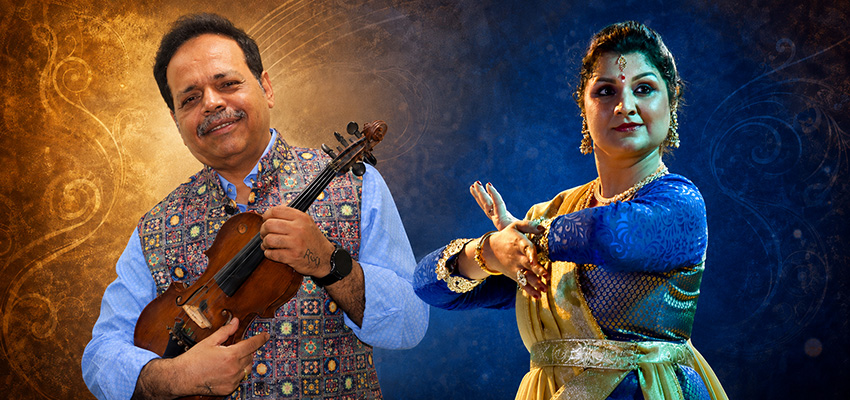
For fifty years, Nashik’s Kirti Kala Mandir has nurtured Kathak not merely as a classroom discipline, but as a living, breathing stage tradition. Founded on 23 February 1976, the institution grew from a single student into a global community of practitioners, guided by a constant desire for innovation, discipline, simplicity, and continuity.
The foundation of Kirti Kala Mandir was strengthened by the trust of parents and the consistent support of the Nashik Education Society. The creative collaboration of poet Radhika Rajpathak, musician Kumud Abhyankar, and choreographer Rekhatai Nadgauda shaped its early artistic direction. Key responsibilities were carried forward by dedicated supporters including Kamalabai Sarda, Neelamtai Kirloskar, Kamaltai Abhyankar, Shobhana Datar, Ashok Kataria and Nandkishor Bhutada, enabling the institution to flourish steadily over the decades.
Rekhatai’s own journey began in the socially conservative Nashik of the 1970s. Encouraged by her mother to pursue at least one art form, she sought training directly under Natraj Pandit Gopikrishna ji from 1969 to 1975 in the Guru-Shishya parampara. Returning to Nashik with a vision, she began Kirti Kala Mandir with her sister Kirti Modak as the first student.
Over the years, the institution produced numerous acclaimed dance works including Swan Ballet, Bhasmasur Mohini, Ragmudra, Navvidha Bhakti, Krishna Madhuri, Nirantar, and many others. A landmark achievement was the grand dance presentation of the complete Ramayana in 1984. Despite limited publicity avenues, sixteen consecutive houseful shows in Nashik were followed by packed performances in Mumbai, Pune, Delhi and internationally in Mauritius and Norway.
On the occasion of poet Kusumagraj’s 75th year, his poems were presented through Rasayatra in his presence—an unforgettable moment for the institution. Following his Jnanpith Award, Doordarshan telecast the production. In 2019, Rasayatra was staged simultaneously in Nashik’s three theatres, creating a historic milestone.
Since 1994, the annual Natraj Pandit Gopikrishna Jayanti Festival has reinforced the Guru-Shishya ethos and positioned Nashik prominently on India’s dance map. Celebratory milestones have included the Silver Jubilee year (2000–01), Nrityanushthan in 2017–18, and now the Golden Jubilee year (23 February 2025 to 23 February 2026), celebrated as “Suvarnarekha Parv.”
The Golden Jubilee has featured children’s festivals, performances by visually impaired artists, presentations of all seven classical dance forms, and appearances by legends including Pandit Birju Maharaj, Pandita Rohini Bhate, Pandit Suresh Talwalkar, Pandita Shama Bhate, Dr. Sandhya Purecha, Kamalini-Nalini Asthana, Pandit Rajendra Gangani and Sucheta Bhide-Chapekar.
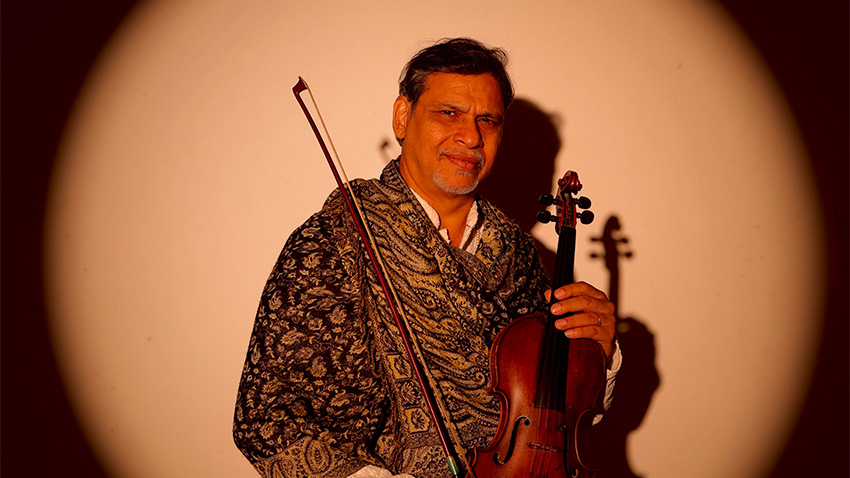
The celebrations began on 23 February 2025 with Mahadev – The Journey of Shiva, conceptualised by Ashwini Kalsekar, and will conclude on 23 February 2026 with Suvarnakshan Nritya Sadhanecha. The finale features performances by Rekhatai Nadgauda and Aditi Panse, with musical accompaniment by Subhash Dashputkar (harmonium), Pooja Dasankkar (synthesiser), Ballal Chavan (tabla), and vocals by Dr. Ashish Ranade and Ishwari Kadadi.
Five decades on, Kirti Kala Mandir stands as a testament to sustained sadhana, evolving creativity, and the enduring resonance of Kathak. The Golden Jubilee celebrations are open to all art lovers.