A dancer’s journey begins early, training the body to imbibe the physicality of these complex art forms. The different parts of the body deal with the energetic vibrancy, the gentle beauty, the educational vastness and above all the spiritual intensity. While age moves in the speed of the universe with its some times lazy and sometimes “blink of an eyelid” pace, the dancer gasps to catch up with this and tries his best to navigate the challenges. The spiritual aspects keep the dancer steady but he is happier to be physically adept, leaving the philosophy and godliness to the simpler delineations almost like a ‘touch & go’ or a know and visit briefly method.
So when does one actually understand the layers of philosophical interpretations that the composers of yore tried to make your inner eye see and wonder? A sudden declaration of the mind when it attains some maturity that, hello! Are you able to see this and more importantly is it creating a flutter in your heart that eventually makes you feel the beauty of the meanings and see the perspective of the composer. The dancer just feels so exhilarated and then what, immediately wants to emote and choreograph the feelings and thoughts weaving them along with the shadaartha traversing the meandering paths through the Sanchari bhavas.
Instantaneously transforming his or her dance from exposition to experience. This Music Academy Chennai performance of Vaibhav Arekar, on Jan 9, 2026, has reached this state merging his dance with aadhyatmic deliverance through the same compositions he might have attempted or performed numerous times in the past. While in this state our physical dance takes a subtle step back and pushes for the Abhinaya to the fore yet for nritta, its precise nature cannot be ignored. Vaibhav’s opening steps with each one representing Male & Female character telling us what was to ensue were just so optimal in execution that highlighted the “suggestive “ aspect of Bharata Natyam. Do we need to do more? Or Is less is more the concept? Every description of Shiva and Parvati in the ardhanarishwaram krithi was thoughtful and highly representative maintaining the differential identities intact.
The Shringara Varnam of Swati Thirunal in Kapi Raaga which is often referred to as a gem in the shining crown compositions of the great King composer was dealt with in this respect by Vaibhav, a true unparalleled composition. The beauty of Manmatha and his arrows are piercing through, creating the fountain of love notwithstanding the pain it can cause. Viraha that is a vedana but a sweet pain that is so acceptable to the lovers, Vaibhav traversed through these emotions with ease and comfort. He felt them and in turn made the audience live through it. He maintained the format intact. A humourous short exposition based on a simple story of a conversation between a Bhakta and Lord Shiva followed. Vaibhav breezed through this with panache.
It was the Balasaraswathi master piece “ Theruvil Vaarano, yennai shatr thirumbi paraano “ that stood tall not only in expression but also in the manner in which he held on to the sthayi bhava, staying in character as they say in theatre and films. Vaibhav kept the “will he glance at me for a moment” look so consistently that the yearning of the heroine came across with the depth of her longing.
Vaibhav concluded his recital with “this body is a splendid tambura” साधो यह तन ठाठ तम्बूरे का । टेक ऐंचत तार मरोरत खूँटी, निकसत राग हजूरे का । (Yeh tan thaat tambure ka), made of the five elements, whose strings should be tuned to resonate with spiritual sounds. The song urges us to listen to this inner music.
The meditative journey began with the Ardhanarishwaram flowing in to the Suma Sayaka Varnam mellifluously unwinding the mood with humour of shivas problems in life and the Shringara Bhakti juxtaposed padam Theruvil Vaarano and finally the kabir composition that took the dive in to the internal depth of one’s own spirituality bringing to light the truth and reality of Jeevan. As an experiencer of this journey the author felt the inclusion or presence of pure dance cadences made the flow a bit stuttered and the coming back to the philosophical realm. This could have been avoided or featured without creating stumblers for the intellectual and spiritual flow.
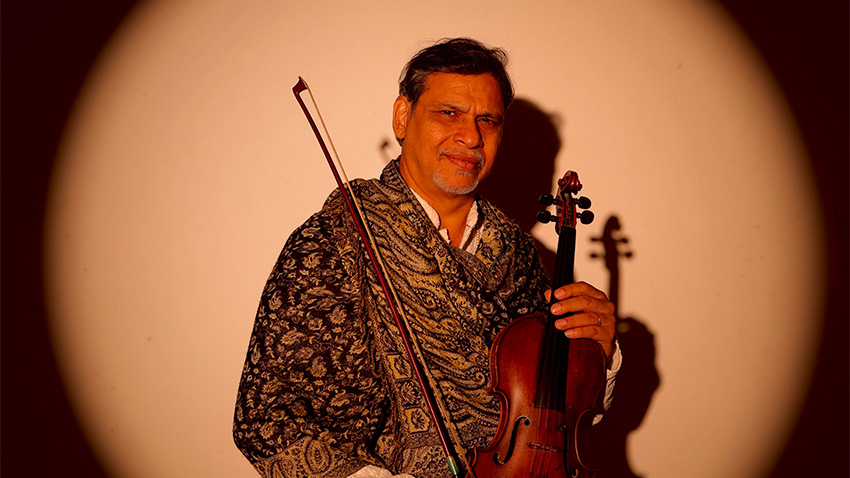
A Special mention about the fantastic music ensemble would be a huge blunder on my part. Each one of them surpassed all our expectations and though one knew and worked with a couple of them in this program they out beat themselves. Raghuram Rajagopalan a Bengaluru boy has a voice to die for and a grasp of the Carnatic genre too. His ability to bring in tremendous Bhava through the nuances and unbelievable sangathis in all the compositions earned the appreciation of the audience throughout his exposition. Kalishwaran Pillai, a young and talented nattuvanar and son of the legendary Nattuvanar Kadirvel Pillai wielded the cymbal’s adroitly in the pure dance segments. The mridangist Satish Krishnamurthy from Mumbai played with such sensitivity and especially his soft handed technique in the intense moments created a beautiful soundscape. The two melodic instrumentalists Vishweshwara Swaminathan playing the violin and Mahesh Swamy on the flute managed their time very effectively alternating between each other. Mahesh Swamy is a popular and extremely sought after flutist of Bengaluru. For a dancer the music ensemble is very crucial and when one attempts a musically stimulating presentation they must merge and enhance the dancers bhavas.
This truly was a meditative journey worth experiencing.